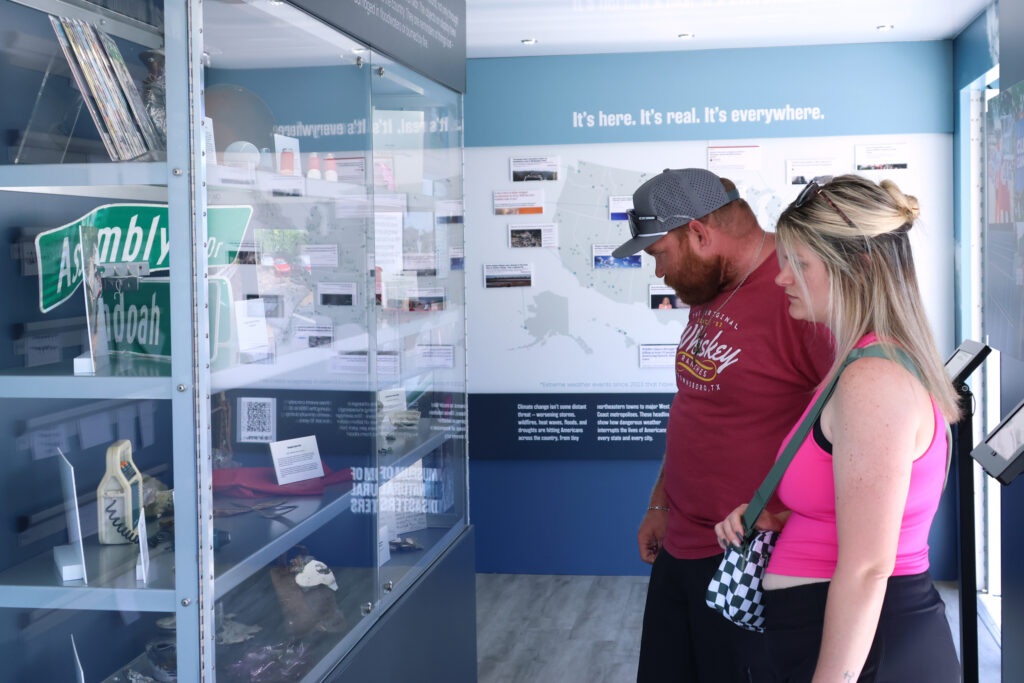
A pop-up exhibit opening in Washington, DC brings the abstract threat of climate-driven extreme weather into tangible, personal terms. The installation, led by the Climate Action Campaign and curated by artist Sam Hartman, a hurricane survivor, asks visitors a deceptively simple question: what would you save if a major storm or wildfire forced you to evacuate?
The exhibit frames climate impacts not as distant statistical projections but as immediate threats to the belongings and memories that define our lives. By inviting visitors to confront what they value most, the installation translates rising global temperatures and intensifying weather patterns into human stakes. The focus on personal loss connects broader climate science to individual experience.
Hartman's background as someone who experienced hurricane damage firsthand shapes the exhibit's emotional authenticity. Climate science demonstrates that atmospheric warming intensifies precipitation and storm surge, increasing hurricane destructiveness. The National Hurricane Center and NOAA data confirm that major hurricanes have grown more intense over recent decades. Similarly, prolonged heat and drought conditions linked to climate change have expanded wildfire seasons across North America.
The DC pop-up represents a growing trend of climate communication that moves beyond policy documents and scientific papers. Museums and galleries increasingly function as spaces where climate impacts become visceral rather than theoretical. The exhibit occupies a middle ground between activism and art, asking visitors to engage with their own vulnerability to changing climate conditions.
By staging the exhibit in the nation's capital, organizers place climate consequences directly in view of policymakers and government agencies responsible for emissions regulations and climate adaptation funding. The timing reflects accelerating extreme weather events. Recent years have brought record-breaking hurricanes, unprecedented wildfires, and severe flooding across multiple regions.
The installation does not prescribe political solutions but invokes the psychological weight of climate risk. For many visitors, the exercise of mentally packing belongings forces recognition that climate change operates at human scale. Major storms