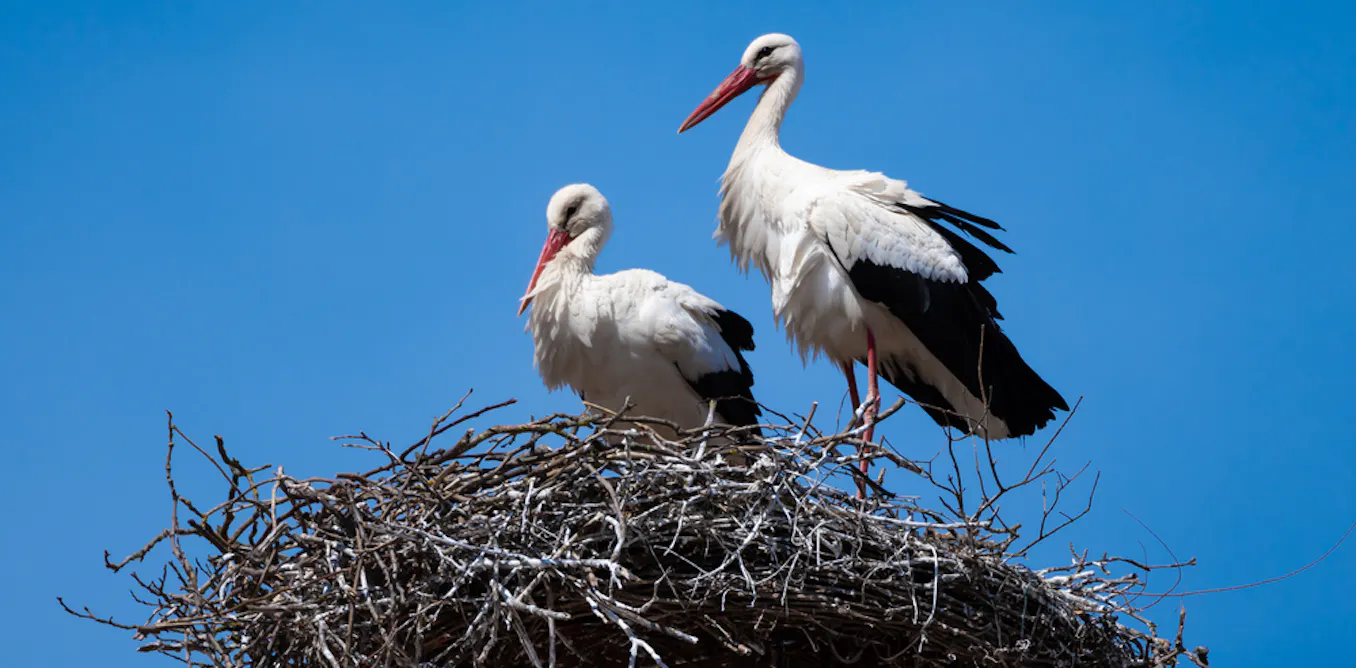
White storks disappeared from England centuries ago, hunted to extinction for food and sport. A rewilding initiative now proposes reintroducing them, a move that challenges conventional conservation wisdom about keeping rewilding projects limited to native species.
The Knepp Estate in West Sussex has already begun housing white storks as part of a broader habitat restoration program. The birds attract thousands of visitors annually, generating measurable public engagement with ecological recovery. This visibility matters for conservation funding and political support, which depend on public interest.
Ecologically, white storks fill a vacant niche in English wetlands and grasslands. They feed on amphibians, reptiles, and insects without direct competition from existing species. Their presence benefits wetland habitats through feeding behavior that disturbs soil and vegetation, creating conditions for other species to thrive. Research on reintroduced stork populations elsewhere in Europe shows they integrate successfully into local ecosystems without damaging agricultural operations.
The reintroduction argument rests on two points. First, white storks occupied English habitats for millennia before humans eliminated them, making historical precedent a justification for their return. Second, climate change has shifted conditions in ways that favor their survival now, unlike scenarios where truly invasive species cause ecological damage.
Critics worry about unforeseen consequences. Non-native reintroductions can compete with existing wildlife or introduce parasites and diseases. Each species carries ecological baggage that predicting tools cannot fully capture. Some conservationists argue resources should focus on protecting remaining populations of genuinely threatened native species rather than restoring species lost to historical human activity.
The white stork debate reflects a broader tension in rewilding. Strict native-species approaches can feel parochial when extinction itself resulted from human action. Pragmatic conservation accepts that ecological communities have shifted. White storks represent a test case for whether reintroduction success requires