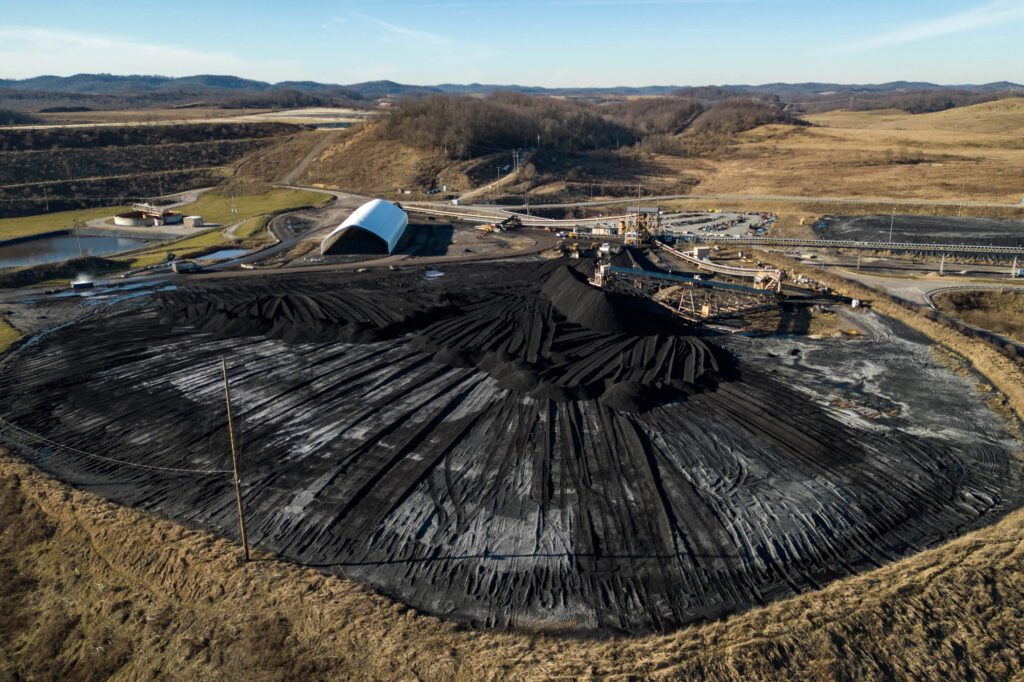
The Trump administration committed $425 million to extend operations at 12 coal plants across multiple states, part of a broader push to sustain coal-fired power generation under the banner of "energy dominance." The U.S. Department of Energy allocated $50 million alone to upgrade the Mitchell Plant in Moundsville, West Virginia, operated by Wheeling Power Company, framing the investment as a modernization effort.
The funding represents a direct reversal of years of coal plant retirements driven by economics and climate policy. Coal plants have closed at accelerating rates as natural gas prices fell and renewable energy costs declined, making coal generation increasingly uncompetitive. This intervention uses federal resources to artificially prop up aging infrastructure.
The decision contradicts the trajectory of U.S. power generation. Coal's share of electricity production dropped to roughly 16 percent in 2023, the lowest on record. Coal plants operating today face mounting pressure from grid operators favoring faster-ramping generation sources and from investor concerns about stranded assets in a decarbonizing economy.
The administration's rationale centers on energy independence and domestic fuel security. Officials argue that maintaining coal capacity preserves manufacturing jobs and stabilizes rural economies dependent on coal mining and plant operations. However, the logic ignores falling demand for coal electricity and the lower cost of alternatives.
Coal plants contribute roughly 20 percent of U.S. greenhouse gas emissions despite generating a shrinking fraction of power. The International Energy Agency and U.S. Environmental Protection Agency both identify coal retirement as essential to meeting climate targets. The 2022 Inflation Reduction Act, passed by the previous Congress, directed massive investment toward renewable energy and grid modernization instead.
The extension of a dozen plants signals an attempt to slow coal's decline through federal subsidy rather than market competition. Each facility sustained through government funding potentially displaces investment in solar, wind, and battery