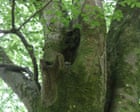
A beech tree in Eggesford Forest, Devon draws an observer into unexpected communion with the woodland ecosystem. Walking through bluebells and firs, a naturalist follows a brimstone butterfly deeper into the forest, guided by the bird calls and delicate movements of spring life. The journey reveals the beech, which the writer calls the "queen of trees," as a focal point of forest activity and interconnection.
The beech holds ecological weight beyond its towering presence. These trees create the conditions for rich understory life. Their dense canopy filters light to create the conditions where bluebells thrive. Their fallen catkins carpet the forest floor, feeding invertebrates and small mammals. The trees themselves support hundreds of species, from bark beetles to nesting birds like the blackcap singing in the canopy.
Beech forests in southern England represent a specific ecological community. They dominate on chalk and limestone soils across the Southeast and Southwest. Eggesford Forest, managed by Forestry England, contains substantial beech stands alongside conifers. These mixed forests provide habitat diversity that monoculture plantations cannot match.
The observation captures what ecologists term "functional connectivity." The butterfly, the bird, the flowering plants, and the beech operate as an integrated system. Remove one element, and cascades follow. Brimstone butterflies depend on buckthorn plants for larval development. Blackcaps require dense shrub cover and insects. Bluebells need the particular light regime that mature beech canopies create.
Spring phenology, the timing of life cycle events, synchronizes across species in healthy forests. The beech catkins fall precisely when soil organisms and invertebrates need the nutrition. The fresh growth coincides with bird breeding cycles. This temporal coordination took years to evolve and collapses quickly under pressure from disease, logging, or climate shifts.