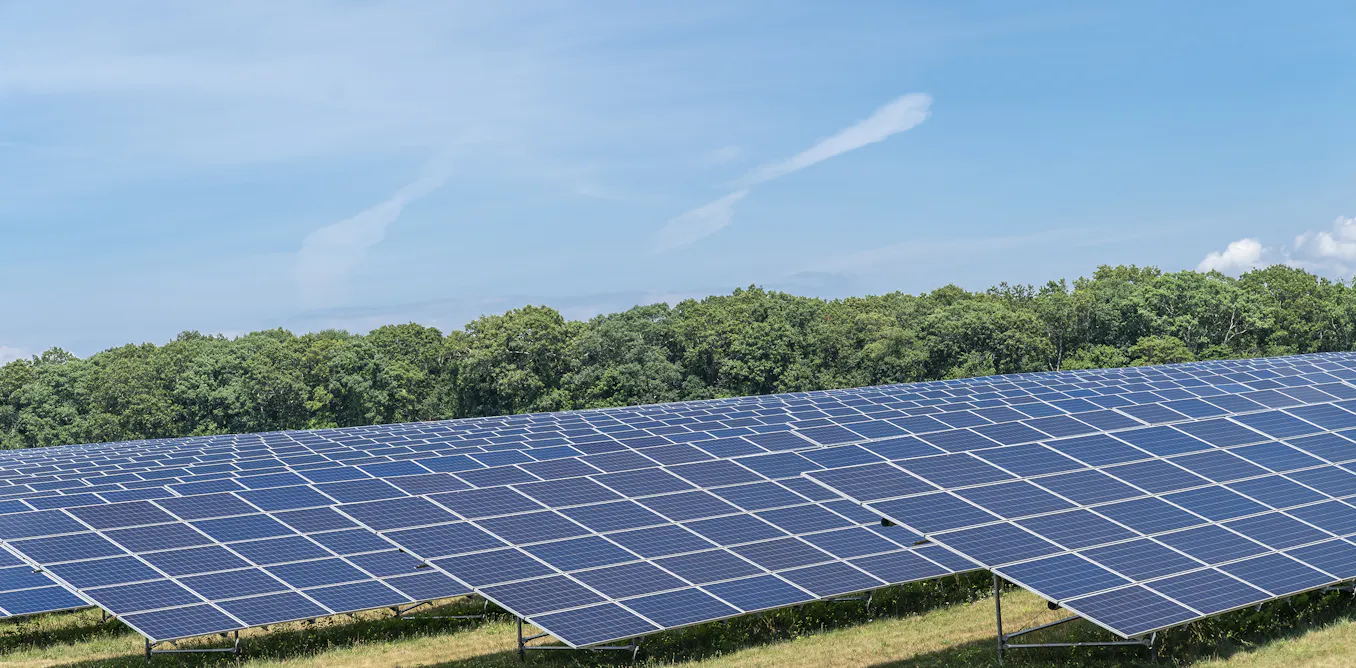
The rapid expansion of solar and wind energy infrastructure presents a land-use dilemma that policymakers and farmers cannot ignore. Generating sufficient renewable power to meet climate targets requires vast tracts of land, yet much of that territory currently serves agricultural or conservation purposes.
A growing body of research examines how to maximize renewable energy deployment while protecting food production and ecosystems. The core tension: solar farms and wind turbines occupy space that could otherwise grow crops or support wildlife habitat. In regions like the American Great Plains and European agricultural zones, this competition has intensified as nations commit to decarbonization goals.
Several approaches offer paths forward. Agrivoltaics, the practice of combining solar panels with crop production, allows farmers to generate electricity while maintaining yields on the same parcel. Studies show that strategic placement of solar arrays can reduce water loss in arid regions while still producing food. Similarly, rotational grazing beneath wind turbines preserves grasslands for livestock and native species.
Land-use planning frameworks must weigh competing priorities systematically. A 2023 analysis found that dedicating marginal agricultural land, degraded soils, and rooftops to solar deployment could supply 40 percent of global electricity demand by 2050 without competing directly with prime farmland. Other research emphasizes the importance of siting renewable projects on industrial brownfields and degraded areas rather than pristine habitats.
The stakes are substantial. Achieving net-zero emissions by 2050 requires tripling renewable energy capacity this decade, according to the International Energy Agency. Yet conversion of natural habitats to energy infrastructure threatens biodiversity and carbon storage in forests and wetlands.
Solutions require cooperation between energy developers, agricultural interests, conservation groups, and local governments. Zoning regulations that integrate renewable siting with agricultural planning can prevent sprawl. Incentive programs encouraging agrivoltaics adoption demonstrate that energy generation and food