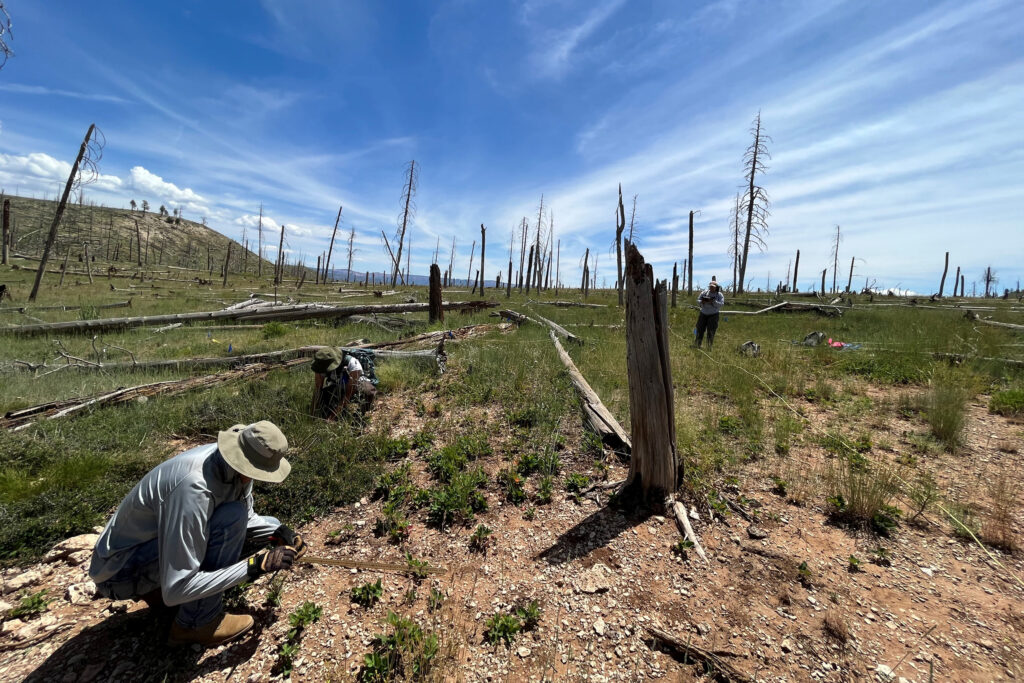
# A 'Reforestation Pipeline' in New Mexico Trains Seedlings to Survive in Burn Scars
Four years after the Calf Canyon/Hermits Peak Fire torched 341,471 acres in northern New Mexico, massive burn scars remain across the state's landscape. The 2022 blaze stands as New Mexico's most destructive wildfire on record, leaving charred forests that demand active restoration rather than passive recovery.
The New Mexico Energy, Minerals and Natural Resources Department (EMNRD) is now implementing a "reforestation pipeline" approach, using specialized nurseries to grow and condition seedlings specifically bred to withstand the harsh conditions of burn scars. The strategy recognizes that post-fire landscapes present extreme challenges. Seedlings face exposure to intense sun, reduced soil moisture, compacted earth, and loss of the forest canopy that typically provides shade and protection.
Rather than replanting standard nursery stock directly into burned areas, the pipeline gradually acclimates seedlings to these conditions. Nurseries in the state are now raising species like ponderosa pine and Douglas fir in progressively harsher growing conditions. This hardening process increases survival rates once seedlings are transplanted into burn scars where temperatures spike and water availability drops sharply.
The approach reflects growing recognition that New Mexico faces a reforestation crisis. The state experiences some of the largest wildfires in the western United States. Each major burn creates vast areas where natural tree regeneration fails, leaving landscapes vulnerable to erosion, flooding, and further degradation.
EMNRD has prioritized this work across multiple burn scars statewide, treating reforestation not as a single event but as an ongoing operation. Nurseries coordinate with land managers to time seedling readiness with planting windows in spring and fall when soil moisture is most favorable.
Success