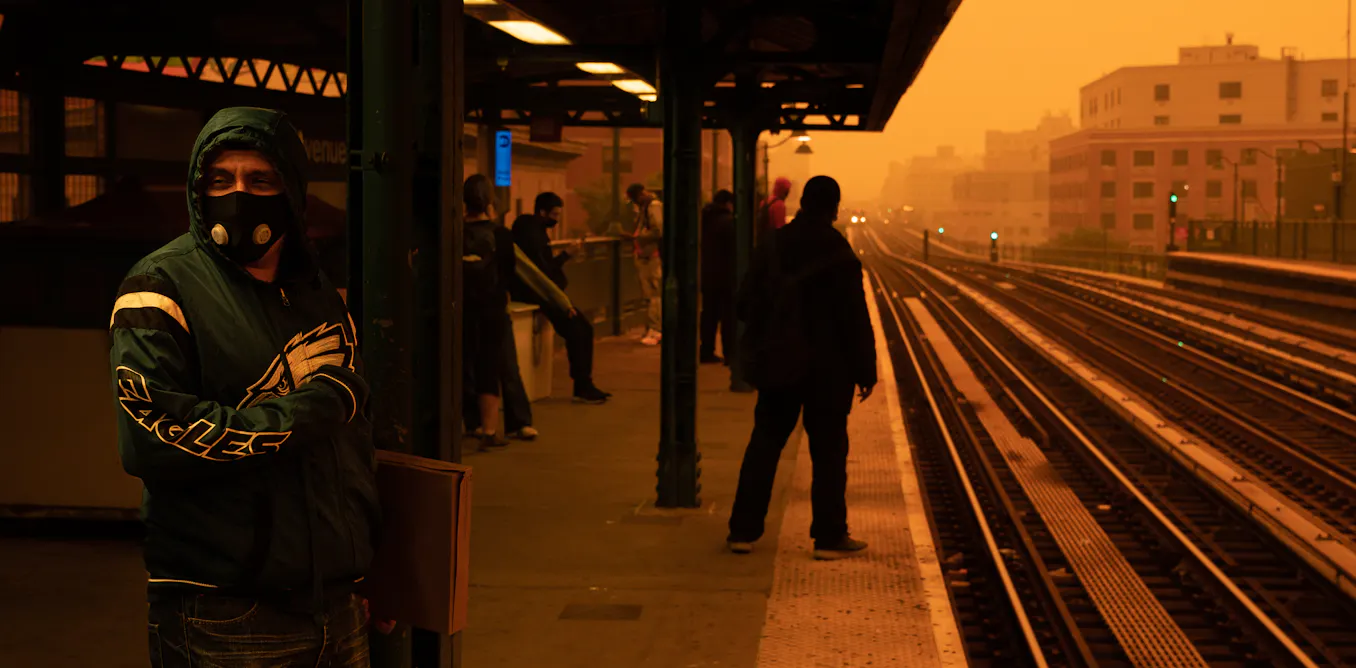
Wildfire smoke is erasing decades of air quality gains across the United States. The nation had steadily reduced ground-level ozone pollution through the Clean Air Act and emissions controls on cars and factories, but this progress stalled around 2015 as wildfire activity intensified.
Surface-level ozone forms when nitrogen oxides and volatile organic compounds react in sunlight. Unlike the ozone layer high in the atmosphere that shields Earth from ultraviolet radiation, ground-level ozone damages human lungs and contributes to smog. The Environmental Protection Agency regulates it as a criteria pollutant under the Clean Air Act.
From the 1990s through the mid-2010s, the US recorded consistent improvements in ozone concentrations. Stricter vehicle emissions standards, cleaner power plants, and industrial regulations drove these reductions. But starting around 2015, wildfire smoke began counteracting these efforts.
Wildfires inject massive amounts of nitrogen oxides and volatile organic compounds into the atmosphere. These precursor chemicals drift hundreds or thousands of miles downwind, where they convert to ozone under sunlight. The 2018 Camp Fire in California, the 2020 Labor Day fires in Oregon and Washington, and the 2021 Dixie Fire all sent ozone-forming pollution across multiple states and regions.
The problem compounds with climate change. Warmer temperatures extend fire seasons, and drier conditions create more fuel for larger, more intense burns. The western US has experienced a dramatic increase in acres burned annually compared to the 1980s and 1990s.
This creates a policy challenge. The EPA sets National Ambient Air Quality Standards for ozone, and regions failing to meet them face penalties and restrictions on new industrial development. Yet some of that ozone originates from wildfires outside their control, not local sources. States increasingly argue that federal policy must