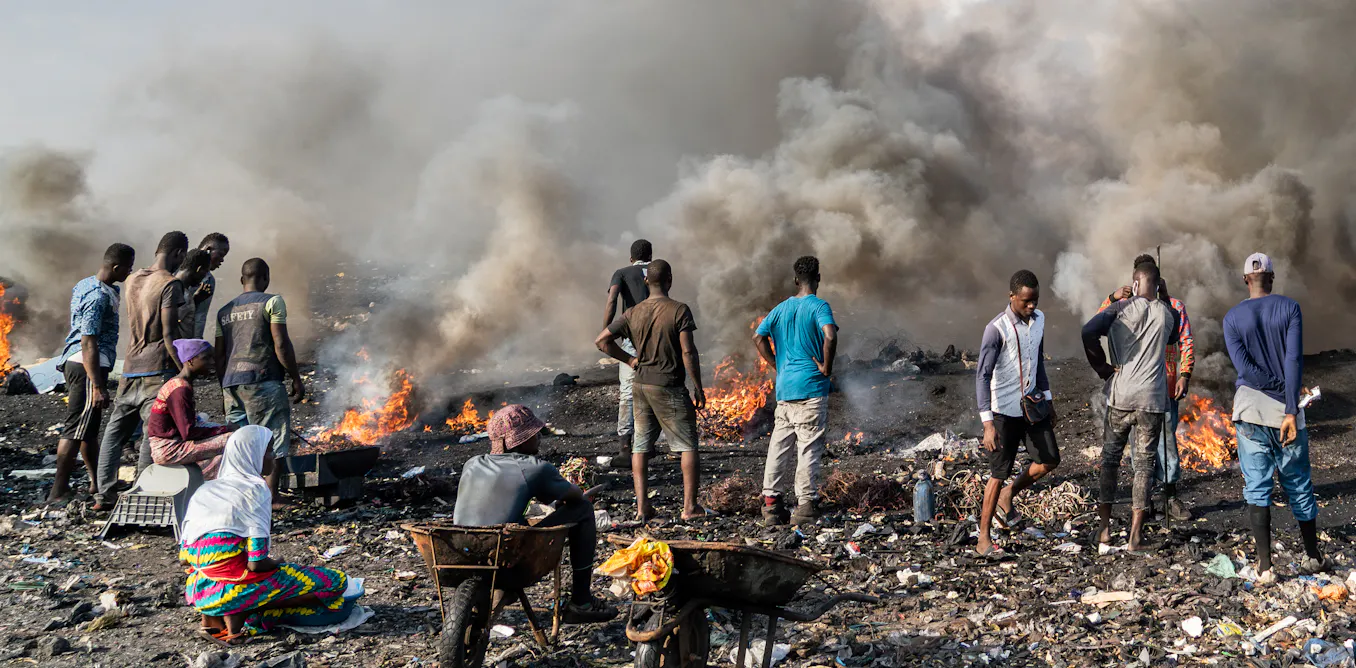
Ghana's e-waste sector generates roughly $200 million annually but leaves workers poisoned. In Agbogbloshie, one of West Africa's largest informal recycling sites, thousands burn circuit boards and cables daily to recover copper, gold, and aluminum. The practice releases lead, cadmium, and mercury into the air and soil.
Workers inhale toxic fumes without respirators. Studies show elevated blood lead levels in e-waste handlers, linked to neurological damage, kidney dysfunction, and reproductive harm. Children as young as five work alongside adults, their developing brains particularly vulnerable to lead exposure.
Ghana receives roughly 250,000 tons of imported e-waste annually, much of it from Europe and North America. The Basel Convention restricts hazardous waste exports, but enforcement remains weak. Shipments arrive labeled as "used goods" to circumvent regulations.
The workers face an economic trap. Most earn $1 to $3 daily from recycling, compared to Ghana's minimum wage of roughly $13 per day. Formal employment is scarce. Without e-waste work, many families have no income source.
Ghana's Environmental Protection Agency acknowledges the problem but lacks resources for enforcement. The government banned the import of used electronics in 2019, yet shipments continue. Fines imposed on importers remain minimal relative to profits.
Workers need occupational health standards, proper equipment, and livable alternatives. Ghana's waste management infrastructure requires substantial investment. Developed nations must accept responsibility for end-of-life electronics rather than exporting the problem. Extended producer responsibility schemes, where manufacturers fund proper recycling, offer one model.
Without intervention, Agbogbloshie's workers will continue breathing poison. The minerals they extract generate wealth that flows elsewhere. Their health costs remain invisible in supply chain calculations.