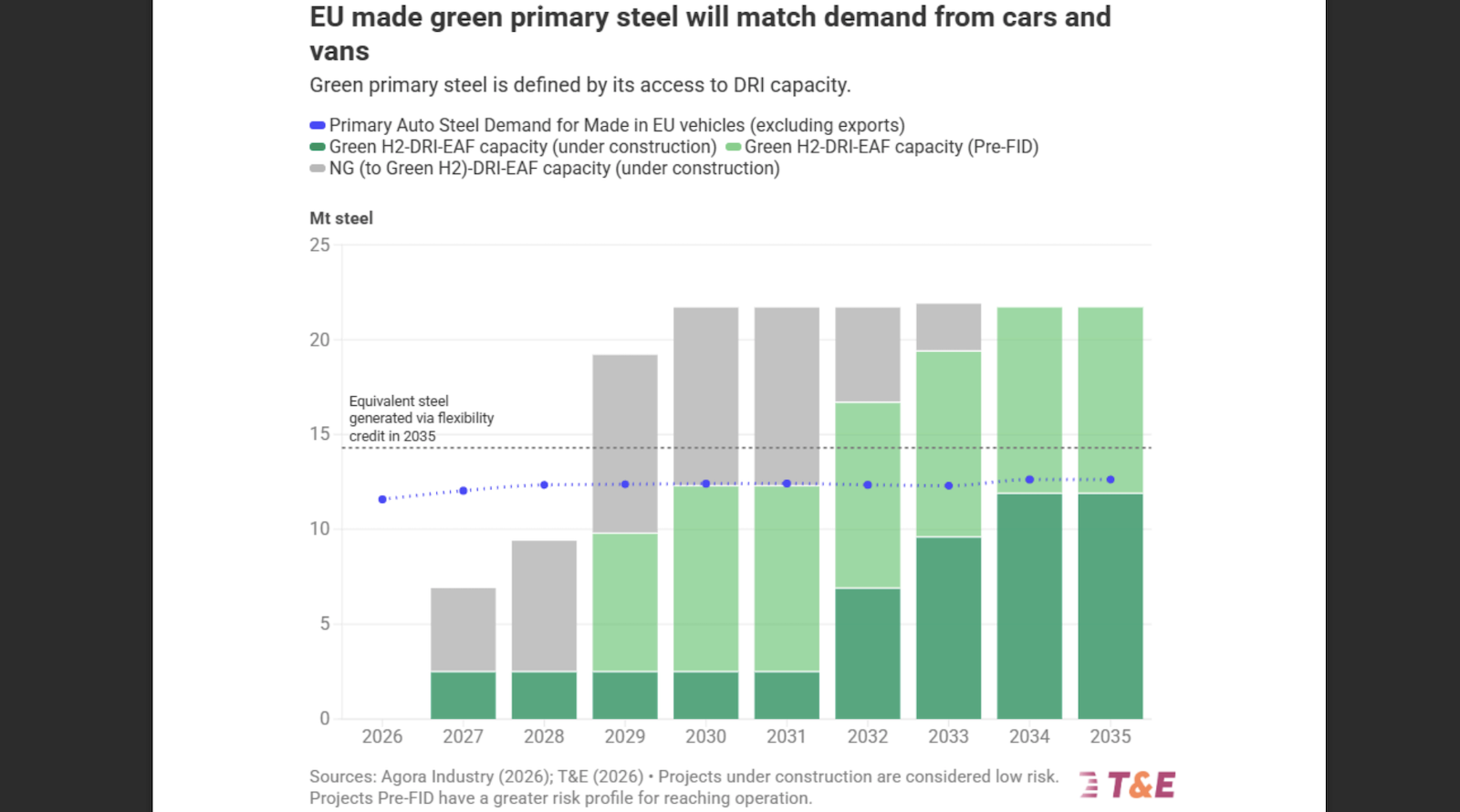
The European Union's revised car CO₂ standards include a credit mechanism for low-carbon steel that could reshape the continent's automotive supply chain and green steel production. Under the framework, automakers that use domestically produced low-carbon steel in vehicle manufacturing earn credits against their fleet emission targets, creating direct financial incentives to source greener materials.
The mechanism works as a demand driver. Europe's automotive sector consumes roughly 9 million tonnes of steel annually. If manufacturers systematically choose low-carbon steel to meet EU standards, they generate a reliable market for green steel producers, enabling European mills to justify investment in electrification and hydrogen-based production methods. These technologies currently carry higher capital costs but produce steel with 50 to 70 percent lower carbon intensity than conventional blast furnace production.
The credit system also serves industrial policy goals. By tying purchasing power to domestic green steel production, the EU aims to retain steelmaking within Europe and prevent carbon leakage, where manufacturers shift production to regions with weaker emission rules. This protects European steel jobs while reducing reliance on imports from countries with higher-carbon production processes.
The credits require strict accounting. Steel must meet defined carbon intensity thresholds verified through product-level carbon footprint data. EU authorities track lifecycle emissions from ore extraction through final production. Manufacturers cannot claim credits for marginal improvements or unverified claims. This rigor builds market confidence that low-carbon labels reflect genuine emissions reductions rather than accounting gimmicks.
Timing matters for success. Green steel production capacity remains limited in Europe. If credit requirements ramp too quickly, manufacturers face supply shortages and cost spikes. If they progress too slowly, the demand signal proves too weak to justify mill investments. EU regulators structured the phase-in to allow steelmakers time to upgrade facilities while maintaining pressure on automakers to transition.
The mechanism also integrates with broader EU climate