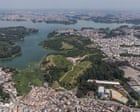
São Paulo's Billings reservoir, the city's largest freshwater source serving 10 million people, faces contamination from untreated sewage, bacterial pollution, and illegal deforestation as the region intensifies its water crisis. Biologist Marta Marcondes and community activist Wesley Silvestre Rosa monitor the reservoir's deteriorating conditions from motorboat surveys, documenting raw sewage discharge points and forest loss directly impacting water quality.
The reservoir supplies roughly half of São Paulo's drinking water while also serving hydroelectric generation. Climate-induced drought has already strained supplies, reducing the system's capacity to dilute contaminants. Organized crime compounds the crisis by facilitating illegal settlement expansion and deforestation in Atlantic Forest protection zones surrounding the water body, destroying vegetation that naturally filters runoff and regulates water flow.
Sewage infiltration remains the primary threat. Multiple municipalities discharge untreated wastewater directly into Billings, introducing pathogens and excess nutrients that trigger harmful algal blooms. These blooms consume oxygen, creating dead zones where aquatic life cannot survive. Water-monitoring equipment reveals bacterial concentrations exceeding safe levels for human consumption and ecosystem health.
Campaigners working with Marcondes and Rosa push for enforcement of existing environmental protections and expansion of wastewater treatment infrastructure. The Atlantic Forest buffer zones possess legal designation requiring preservation, yet enforcement remains weak. Reforestation efforts aim to restore natural filtration capacity and stabilize the watershed. However, rapid urban sprawl into protected areas continues, driven partly by organized crime networks profiting from illegal land occupation.
São Paulo's water authority acknowledges the contamination but prioritizes expensive water imports and treatment expansion over upstream pollution prevention. The city has invested in some sewage treatment upgrades, yet capacity lags behind population growth in peripheral areas. Experts warn that without reversing deforestation and implementing comprehensive