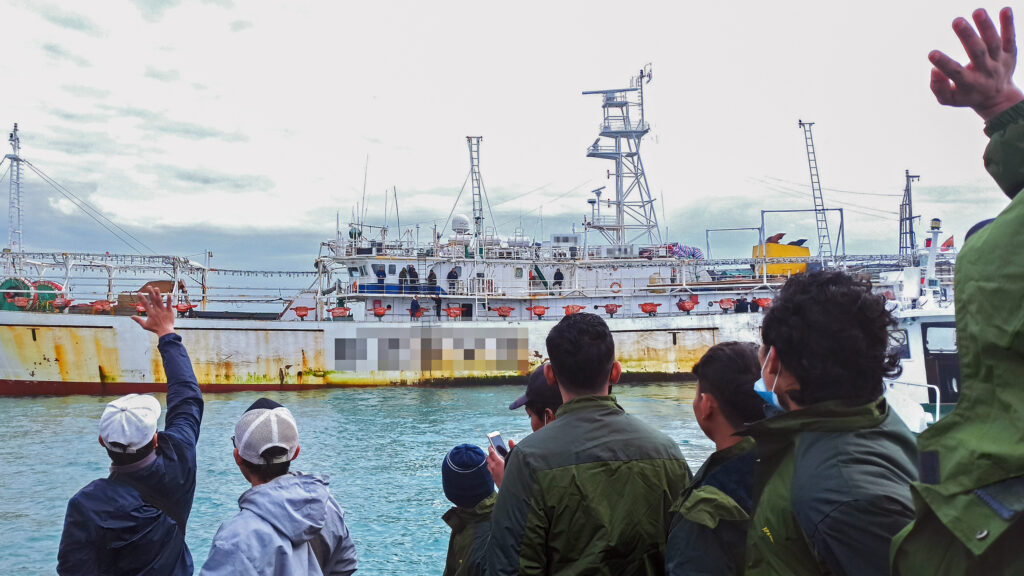
Hundreds of crew members from Indonesia and the Philippines have documented systematic environmental crimes and labor abuses aboard unregulated squid fishing vessels operating on the high seas, according to a report from the nonprofit Environmental Justice Foundation. The ships use intense lighting systems visible from space to attract squid at night, but operate largely beyond regulatory oversight.
The squid fleets inflict damage across multiple fronts. Dolphins, sharks, and sea turtles die in fishing nets intended for squid. Workers endure exploitative conditions aboard vessels that dodge accountability mechanisms designed to monitor ocean fishing. The bright lights themselves disrupt marine ecosystems and attract non-target species into danger.
Indonesian and Filipino fishermen report wages withheld for months, unsafe working conditions, and forced labor. Some crews face physical violence. The vessels often switch flags between nations to evade enforcement, operate without proper licensing, and underreport or falsify catch records. This opacity allows the fleet to expand fishing pressure on squid stocks without environmental assessment.
Squid fishing ranks among the fastest-growing fisheries globally, driven by rising demand for calamari in restaurants and processed seafood markets. The squid vessels concentrate in productive regions: the waters off West Africa, Southeast Asia, and around South America. Industrial operations deploy massive purse seine nets and jigging equipment capable of catching tons of squid nightly.
The Environmental Justice Foundation's investigation directly interviewed former crew members who documented bycatch incidents, unsanitary food storage, and wage theft. Their testimony reveals a pattern rather than isolated incidents. Nations including Indonesia and the Philippines lack enforcement capacity to monitor their registered vessels once they leave territorial waters. International bodies lack mandate to regulate squid fishing with the same rigor applied to other commercial fisheries.
The squid industry's expansion continues unchecked. Without crew testimony and whistleblower accounts, these abuses would remain invisible. Regulatory gaps allow operators to extern