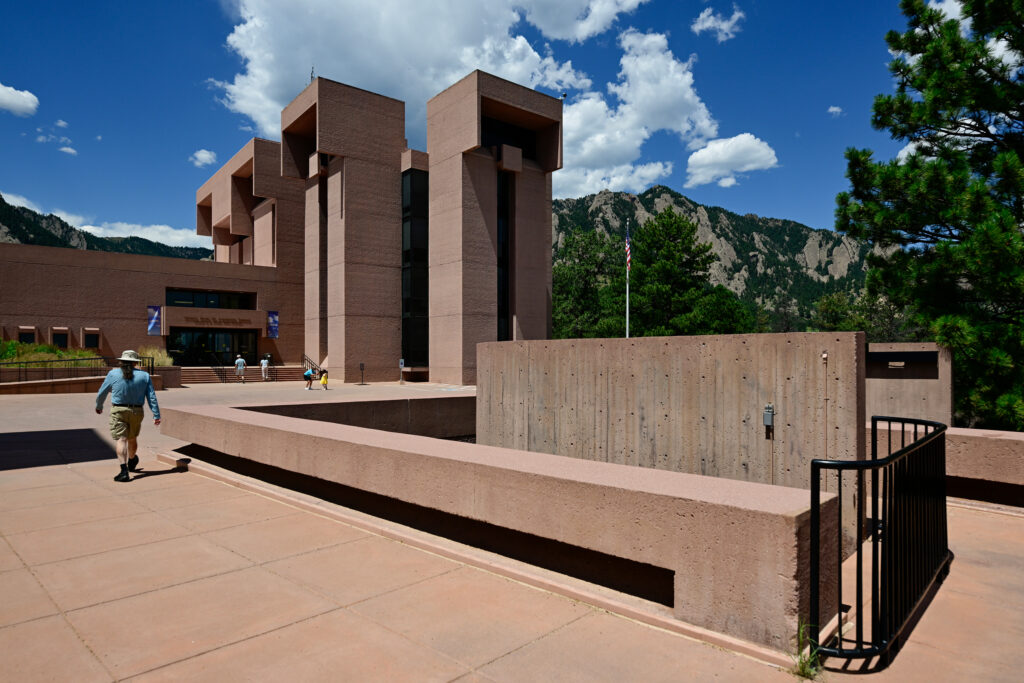
The Trump administration has proposed eliminating funding for the National Center for Atmospheric Research, a federally funded institution in Boulder, Colorado, that has served as a cornerstone of American climate science for decades.
NCAR conducts research on atmospheric dynamics, climate modeling, and weather prediction. The center operates the Community Earth System Model, a tool used by thousands of scientists worldwide to project future climate scenarios and test policy responses. The facility also trains graduate students and hosts visiting researchers from international institutions.
Waleed Abdalati, former NASA chief scientist, outlined the consequences of defunding NCAR in an interview with Living on Earth. The loss would fragment American climate research capacity at a moment when understanding atmospheric changes becomes increasingly urgent. Universities and private institutions cannot easily replace NCAR's infrastructure, its supercomputing resources, or its long-term data archives spanning decades.
NCAR's research directly informs federal agencies. The National Weather Service relies on NCAR models for seasonal forecasts. The Department of Energy uses NCAR climate projections for infrastructure planning. State and local governments depend on NCAR data for drought assessments, flood risk analysis, and renewable energy siting decisions.
The center also contributes to international climate assessments. Scientists at NCAR participate in the Intergovernmental Panel on Climate Change, which synthesizes global research into reports that guide United Nations negotiations and national climate commitments.
Eliminating NCAR would create a vacuum in atmospheric research leadership. Other nations, particularly China and the European Union, operate comparable research centers and would likely expand their climate modeling work. American scientists would face reduced opportunities to conduct long-term studies, forcing many to pursue funding elsewhere or leave the field.
The proposed cut reflects broader questions about the federal government's role in funding basic science. NCAR's annual budget represents a fraction of total federal research spending, yet its atmospheric models underpin everything from hurricane