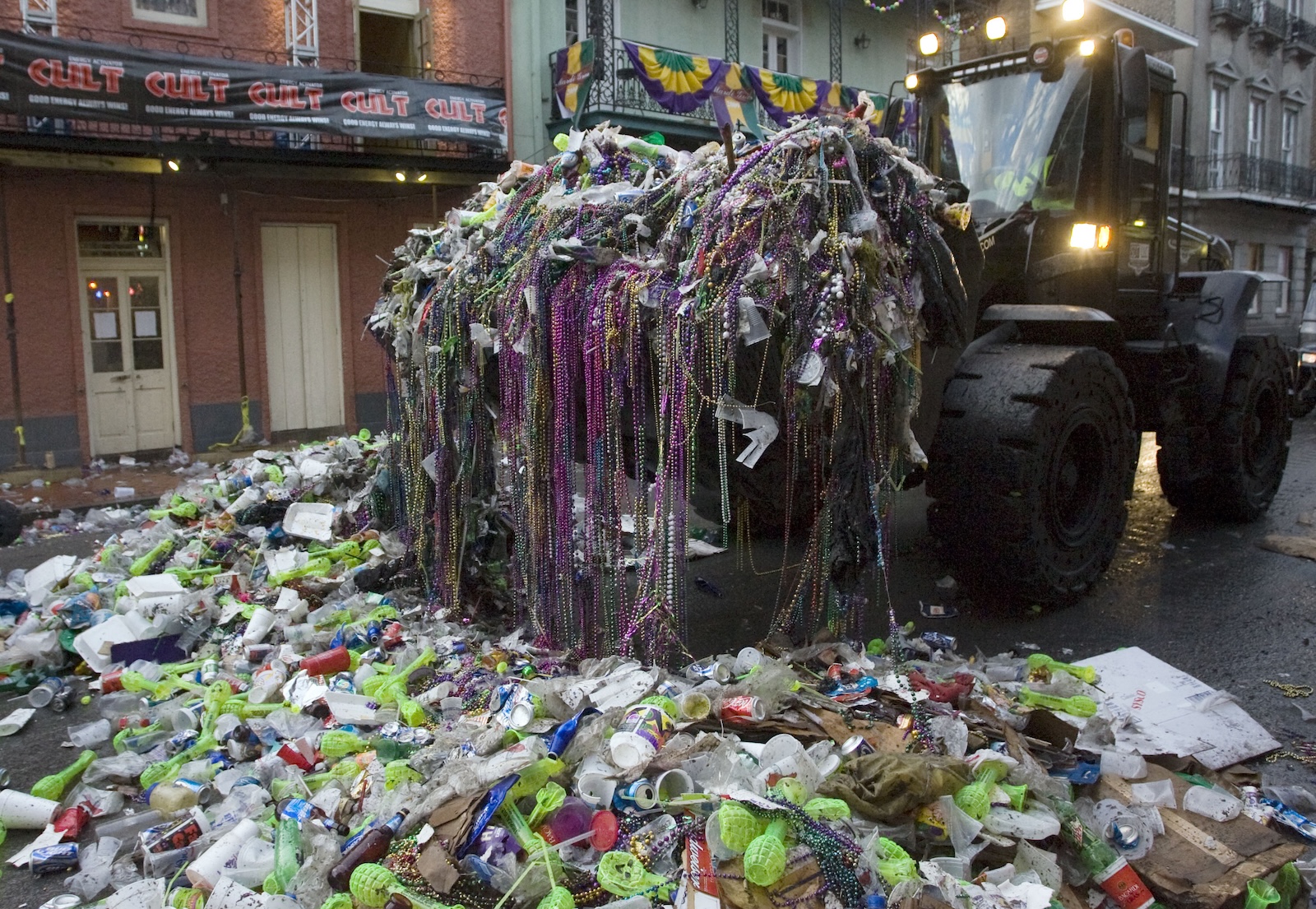
New Orleans collected 1.4 tons of debris from this year's Carnival season, marking the highest annual total recorded. The trash accumulation reflects a persistent waste management challenge during Mardi Gras, when parades generate enormous volumes of single-use items including plastic beads, aluminum cans, food waste, and discarded costumes across the city's streets.
City officials have implemented cleanup efforts and waste reduction campaigns, yet the trash pile continues expanding year over year. The volume underscores the scale of consumption during Carnival, which draws over a million visitors and residents who participate in multi-day festivities. Standard street sweeping and collection methods struggle to handle the concentrated refuse generated over just two weeks.
New Orleans' waste infrastructure faces particular strain because parade routes cover extensive distances through residential and commercial districts. Beads alone represent a substantial portion of the debris. The city distributes millions of them annually, and recovery rates remain low despite efforts to encourage reuse and collection programs.
The growing trash totals raise questions about the effectiveness of current intervention strategies. Some environmentalists and city planners have proposed stricter regulations on bead distribution, promoting biodegradable alternatives, or implementing deposit systems for consumer items like beer cans. However, these approaches face resistance from parade organizations and vendors who view bead throws as central to Carnival tradition.
The waste problem extends beyond aesthetics. Plastic debris contaminates New Orleans' waterways and marshlands, contributing to broader pollution challenges in a region already vulnerable to environmental degradation. The city's stormwater systems struggle to filter the volume of refuse, allowing plastics and metals to reach nearby wetlands and the Mississippi River.
Officials acknowledge the tension between preserving Carnival culture and addressing environmental consequences. Some parade krewes have begun experimenting with biodegradable throws and reducing overall quantities distributed. The city has also expanded post-parade cleanup crews and promoted volunteer