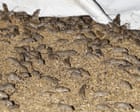
A mouse plague is decimating grain crops across Western Australia and South Australia, with populations reaching densities that exceed plague thresholds by orders of magnitude.
CSIRO researcher Steve Henry documented densities exceeding 4,000 mouse burrows per hectare in parts of Western Australia. Henry defines plague conditions as populations above 800 mice per hectare, meaning current densities in some regions represent a five-fold intensification of crisis conditions.
The outbreak threatens grain harvests across both states. Farmers report infestations so severe that escape becomes impossible. Mouse populations explode during favorable breeding seasons when grain crops provide abundant food and cover, creating conditions for rapid population growth.
Western Australia's grain belt faces the most acute pressure. The sheer density of burrows indicates mice have colonized nearly every patch of available habitat across affected agricultural land. This scale of infestation requires coordinated pest management responses that conventional methods struggle to contain.
South Australia reports surging numbers, signaling the plague may expand beyond current hotspots. The timing coincides with harvest season, when grain availability sustains breeding populations and compounds losses for farmers already facing thin margins.
Mouse plagues follow cyclical patterns tied to rainfall and crop conditions. When drought breaks and grain production surges, mouse populations respond within weeks. CSIRO's monitoring provides early warning, but intervention capacity remains limited once densities reach these levels.
Grain growers face mounting crop damage and storage losses. Rodent populations consume grain directly and contaminate stored supplies, rendering harvests unmarketable. The economic impact extends beyond immediate crop loss to include cleanup and grain salvage costs.
Control efforts center on baiting programs, though widespread application across large agricultural areas presents logistical and cost barriers. Farmers implement preventative measures including grain storage management and habitat modification, but these prove insufficient during plague conditions. The CSIRO continues monitoring population dynamics to predict outbreak severity and