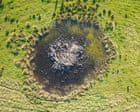
A German V2 rocket that struck Walthamstow Marshes in east London during February 1945 created a crater that has evolved into a thriving wildlife pond nearly 80 years later. Left undisturbed, the bomb crater filled with water and sediment, becoming what park rangers now call Bomb Crater Pond. Today it supports diverse aquatic plants and animal life despite its violent origin.
Luke Boyle, a ranger for the Lee Valley Regional Park Authority, describes the site as small but ecologically productive. The pond's hydrology operates without active management, allowing natural processes to govern water levels and species composition. Aquatic plants have colonized the margins, and early spring shoots indicate active biological productivity.
The phenomenon extends beyond London. Scientists studying land recently obliterated by Russian bombardment in Ukraine, 1,500 miles away, have documented similar ecological recovery patterns. Research indicates that nature begins healing bomb-scarred landscapes with surprising speed once disturbance ceases.
This parallel between World War II bomb craters and contemporary conflict zones demonstrates ecological resilience. Disturbed land, when left untouched, supports regeneration through natural succession. Invasive species colonize exposed soil and water. Native plants and invertebrates follow, creating habitats that support vertebrate wildlife.
The Walthamstow site reveals how wartime destruction can inadvertently create conservation value. The crater's isolation from intensive management has allowed it to develop characteristics of natural ponds. Such sites increasingly feature in biodiversity surveys across London and southeastern England, where bomb damage from the 1940s remains visible in the landscape.
The Ukraine research carries particular relevance. Conflict-affected environments typically face prolonged degradation from contamination, infrastructure damage, and ongoing disturbance. Yet preliminary observations suggest that simply halting destructive activity allows ecological recovery to commence. Herbaceous plants