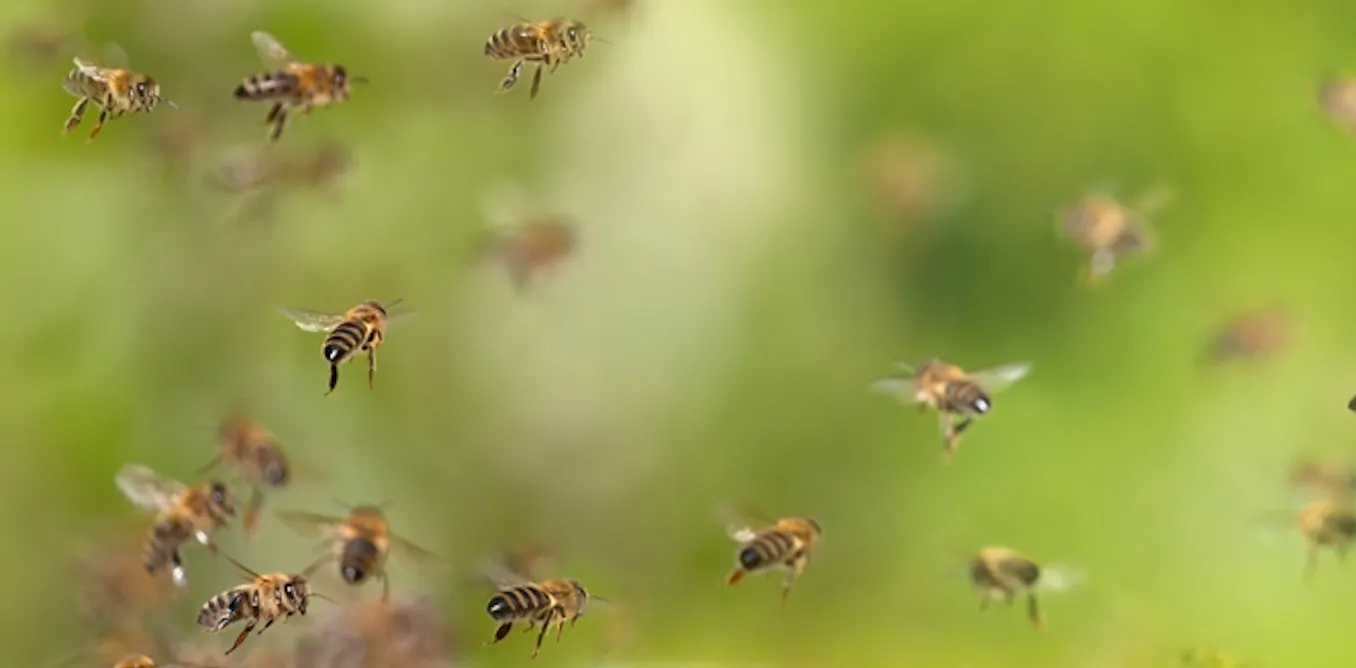
Bees function as far more than pollinators in ecosystems, providing critical resources to hundreds of other species through food, shelter, and transport services ahead of World Bee Day on May 20.
Many animals consume bees directly. Bee-eaters, a family of colorful birds, hunt and feed on flying bees throughout Africa, Europe, and Asia. Hornets attack honeybee colonies to harvest larvae and pupae for protein. Some parasitic flies lay eggs in bees, using them as hosts for developing offspring. Certain spiders specialize in hunting bees at flowers, while badgers raid underground nests for protein-rich larvae.
Beyond predation, animals shelter within bee structures. Cavity-nesting bees create holes in dead wood and soil that later serve as homes for other insects, spiders, and small vertebrates. Abandoned honeybee hives attract beetles, moths, and mites seeking refuge. Some species form mutualistic relationships, like ants that tend aphids on plants visited by bees, creating interdependent food webs.
Bees also inadvertently provide transportation. Small arthropods, including mites and other insects, hitchhike on bee bodies to reach new flowers, expanding their foraging range. Some organisms use bees as dispersal vectors to colonize new habitats without expending their own energy.
Honeybee products themselves support wildlife. Beekeeping operations provide winter access to stored pollen and honey for foraging animals during food-scarce seasons. Propolis, a resinous mixture bees collect and use to seal hives, contains antimicrobial compounds that other organisms exploit for their own immune defenses.
The interconnectedness extends to predator-prey dynamics. Bee abundance influences populations of their predators, creating cascading effects throughout food webs. When bee populations decline, animals