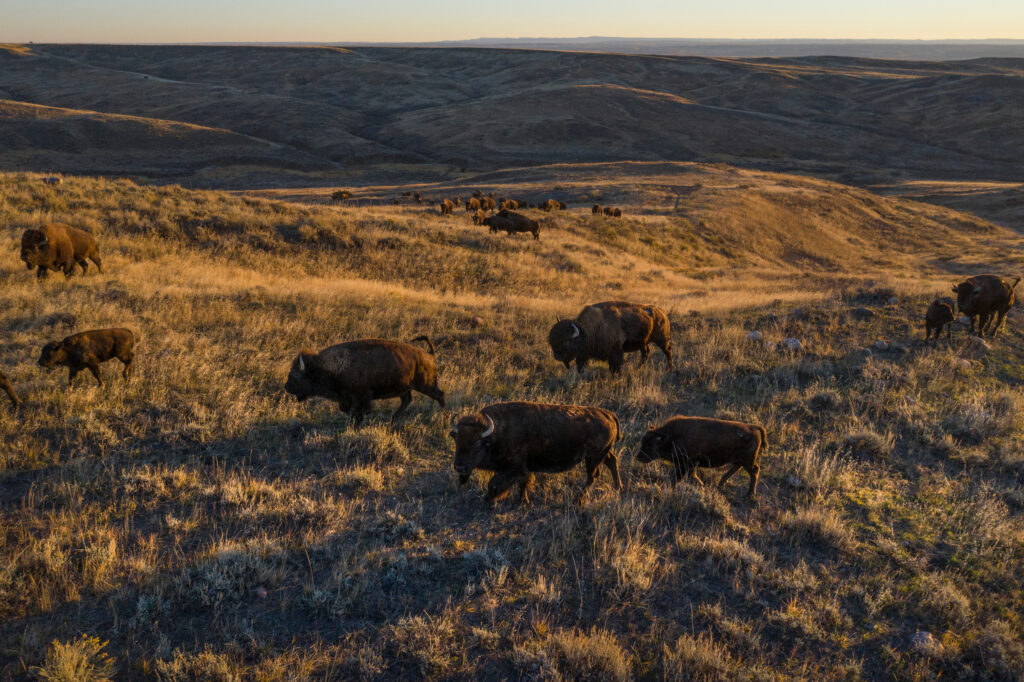
The Trump administration's Interior Department issued a narrowly tailored ban on bison grazing on federal lands, targeting a single conservation nonprofit while exempting Native American tribes operating larger herds across the West.
The agency released its "final decision" earlier this month, restricting grazing rights for one state-based nonprofit bison operation on public lands. The move presents legal complexities while offering what officials framed as conciliatory language toward dozens of tribes managing bison herds across western public lands.
The decision reflects tension between conservation practices and grazing policy on federal acreage. Conservation-focused bison operations have expanded in recent years as a land management tool and wildlife restoration strategy. Bison grazing can reduce wildfire risk, improve soil health, and support prairie ecosystem recovery compared to cattle grazing. The nonprofit in question has operated under federal grazing permits that allow rotational management across public lands.
The Interior Department's selective approach suggests political calculation around tribal sovereignty. Native American tribes hold treaty rights to hunt and manage wildlife on federal lands, creating legal protections distinct from those available to nonprofit organizations. The administration's preservation of tribal grazing rights while restricting the nonprofit operation avoids direct conflict with tribal governments while appearing to crack down on grazing expansion.
The legal framing remains unclear. Federal grazing policy typically applies uniform standards across permit holders. Exempting tribes while banning a single nonprofit raises questions about the regulatory basis for distinguishing between operators. Interior did not provide detailed justification for the disparate treatment.
Bison herds managed by tribes play roles in both cultural preservation and landscape restoration. Many tribal programs integrate traditional ecological knowledge with contemporary conservation science. The Interior Department's decision preserves these operations while blocking at least one alternative management model.
The ban affects ongoing habitat restoration efforts in the region and may signal broader administration skepticism toward nonprofit-led land management on public property. Wildlife advocates have called the decision incons