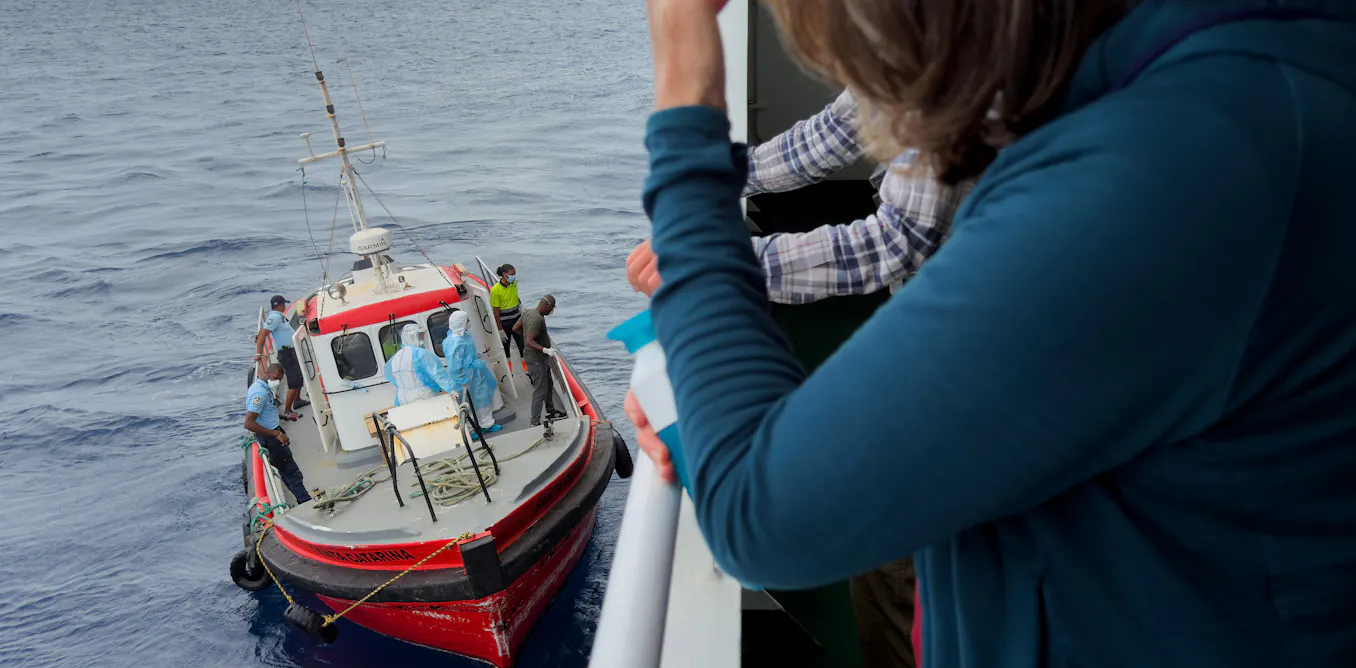
Centuries before the World Health Organization existed, maritime quarantines shaped how nations responded to infectious disease. During medieval times, plague-stricken ships arriving at European ports triggered the first systematic isolation protocols. Venice introduced the "quarantena," a 40-day isolation period, establishing a framework that would influence pandemic response for generations.
This history reveals how ocean-based disease transmission forced governments to develop international cooperation. Ships carried not just cargo but pathogens across trade routes. The 1918 influenza pandemic demonstrated the limits of isolated responses, killing over 50 million people globally. Disease outbreaks at sea, from cholera epidemics to the more recent hantavirus cases aboard vessels, exposed gaps in cross-border information sharing.
The modern international public health infrastructure emerged directly from these maritime crises. The WHO, founded in 1948, codified principles born from centuries of seafaring nations learning that unilateral action failed. Today's International Health Regulations require countries to report disease outbreaks and share data through international channels. The system depends on transparency and cooperation.
Yet contemporary outbreaks demonstrate persistent vulnerabilities. When hantavirus cases emerge on ships, effective response hinges on rapid communication between port authorities, health ministries, and maritime organizations. A single vessel can spread infection across multiple nations within weeks. Modern travel networks compress timelines that medieval quarantine officers worked with.
The historical arc matters because current global health governance traces directly to maritime experience. Countries learned through costly repetition that information asymmetries kill. A port authority that lacks data about disease status cannot implement protective measures. A nation that hoards outbreak information endangers neighboring states.
The COVID-19 pandemic renewed lessons from plague ships. Early suppression of outbreak data allowed the virus to spread across continents. Conversely, nations sharing genomic sequences and case information enabled faster vaccine development and variant tracking. Hantavirus cases