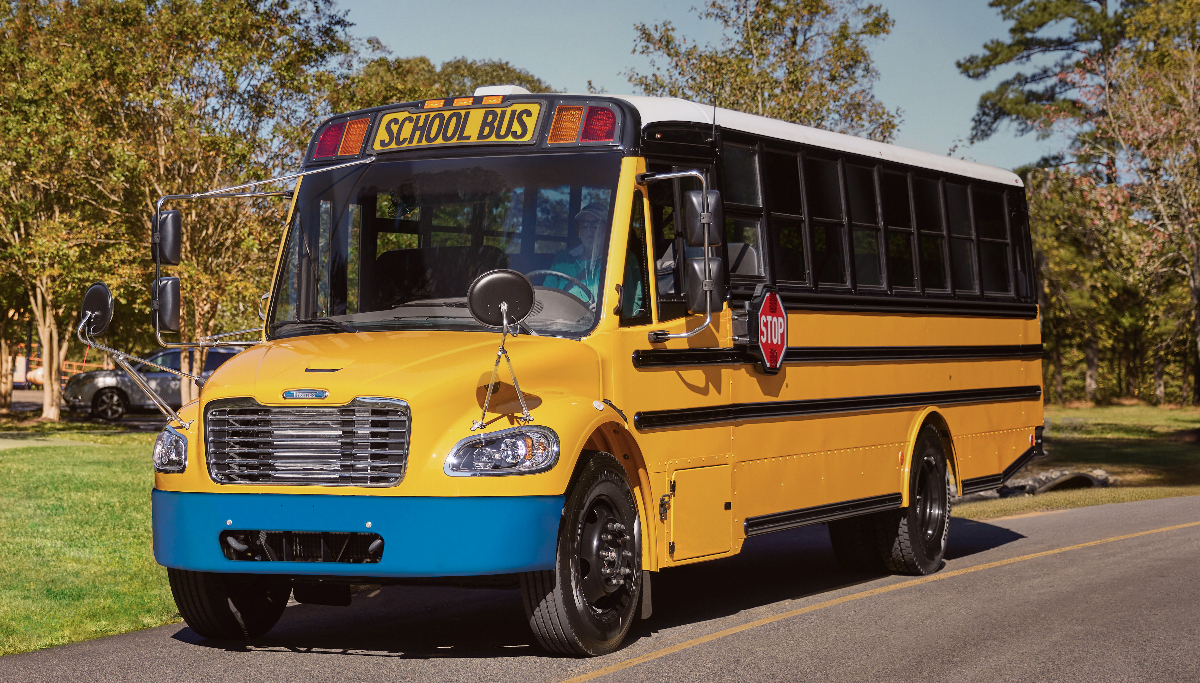
A school bus driver operating an electric vehicle has committed to abandoning diesel fuel. The driver's decision rests on firsthand experience rather than abstract data, highlighting how operational realities shape adoption of cleaner transportation technology.
School buses represent a significant emissions source in the United States. The American School Bus Council estimates approximately 480,000 school buses operate nationwide, with the vast majority burning diesel fuel. These vehicles collectively emit roughly 5.5 million tons of CO2 annually while exposing students and drivers to nitrogen oxides and particulate matter linked to respiratory illness.
Electric school buses eliminate tailpipe emissions entirely. The Environmental Protection Agency has documented that switching a single diesel bus to electric reduces annual CO2 output by 12-15 tons depending on regional electricity grids. Major school districts including Los Angeles Unified and New York City have begun fleet transitions, driven partly by federal funding mechanisms including the EPA's Clean School Bus Program, which allocated $5 billion for electric bus purchases through 2026.
The driver's reluctance to return to diesel reflects operational advantages beyond environmental metrics. Electric buses produce minimal noise, reducing cabin stress for both operators and students. Maintenance costs decline substantially since electric motors contain fewer moving parts than internal combustion engines. Drivers report improved acceleration and smoother braking compared to traditional diesel models.
Anecdotal evidence, while lacking scientific rigor, often precedes institutional change. Fleet managers and administrators frequently rely on operator feedback when evaluating vehicle performance and reliability. A driver's direct testimony about comfort, efficiency, and operational ease carries weight in procurement decisions where quantitative data alone may not capture user experience.
The shift from diesel to electric school buses accelerates through such grassroots endorsements combined with policy support and cost parity improvements. As battery technology matures and manufacturing scales, the total cost of ownership for electric buses continues narrowing toward diesel equivalents. Driver testimonials reinforce what