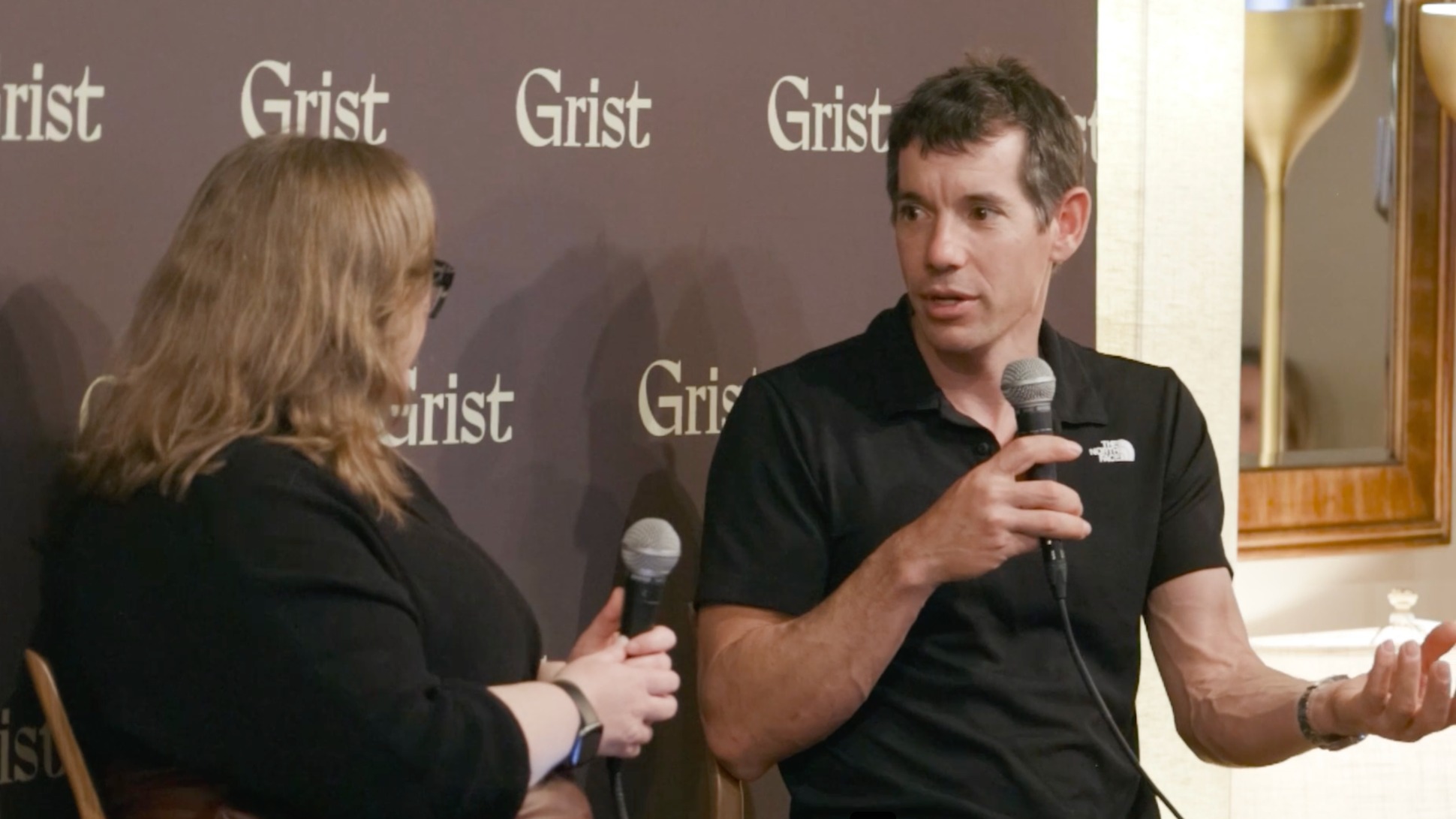
Free solo climber Alex Honnold spoke at Grist's Turning the Tide event during SF Climate Week about connecting his climbing career to renewable energy advocacy and community empowerment.
Honnold, known for ascending sheer rock faces without ropes or safety equipment, has channeled his public platform toward solar energy adoption. His organization, the Honnold Foundation, funds solar installations in underserved communities across the American West and in developing nations. The foundation has deployed solar systems to households that lack grid access or face prohibitively high energy costs.
Speaking at the San Francisco event, Honnold emphasized how witnessing the tangible impact of renewable energy projects on communities shifted his perspective from personal achievement to collective benefit. "You just see how much it matters," he said, reflecting on his work bringing clean energy to families and villages.
The climber's pivot from solo mountaineering to climate action reflects a broader trend among prominent athletes and adventurers using their visibility to advance environmental causes. Honnold Foundation projects have installed megawatts of solar capacity in off-grid locations where conventional electrification remains economically unfeasible.
His involvement in renewable energy also addresses energy poverty, a persistent challenge in rural and low-income regions. Solar installations reduce reliance on diesel generators and kerosene lamps while lowering household energy expenses. In areas without electrical infrastructure, distributed solar systems provide immediate access to reliable power for lighting, refrigeration, and communications.
Honnold's remarks at SF Climate Week underscore how individual environmental commitment translates into measurable policy and infrastructure outcomes. His work demonstrates that scaling renewable energy requires both technological deployment and strategic focus on communities historically excluded from clean energy benefits.
The Honnold Foundation operates alongside policy advocacy groups and development organizations to integrate solar adoption with financial literacy and maintenance training, ensuring long-term system viability in recipient communities.