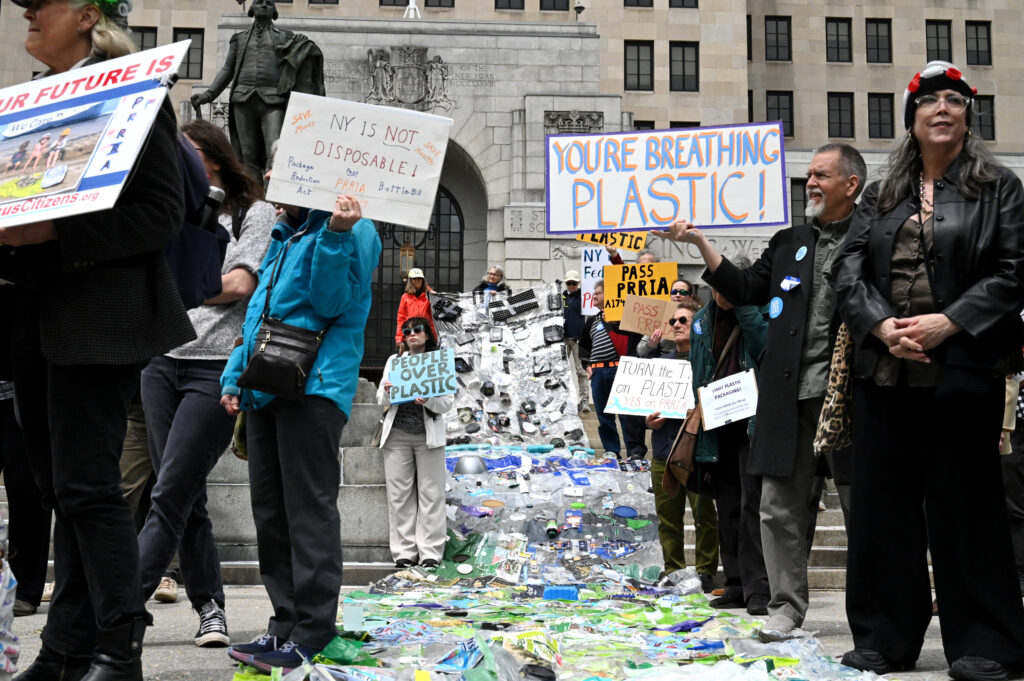
New York's plastic waste reduction bill is progressing through the state Legislature as lawmakers clash over whether to include chemical recycling in the law. The legislation targets one of the country's strictest regulations on plastic packaging, with potential to cut non-recyclable packaging in the state by 30 percent if enacted.
The bill requires producers to reduce single-use plastic packaging and establishes minimum recycled content standards for certain plastic products. Manufacturers would face financial responsibility for managing end-of-life packaging waste under an extended producer responsibility framework. The law would apply to companies selling products in New York, making them accountable for the environmental costs of their packaging choices.
Chemical recycling, also called advanced recycling, has become a flashpoint in negotiations. The process breaks down plastic polymers at the molecular level to create new raw materials or fuel. Proponents argue it diverts waste from landfills and incinerators. Environmental groups and traditional recyclers counter that chemical recycling consumes significant energy, produces emissions, and lacks proven scalability. They worry inclusion in the law would let companies off the hook from reducing packaging at the source.
New York generates roughly 23 million tons of waste annually, with plastics comprising a growing share. Traditional mechanical recycling rates for plastic remain below 10 percent nationally, with most plastic ending up in landfills or oceans. The state's proposed law addresses this gap by shifting responsibility upstream to producers rather than relying solely on consumer recycling behavior.
Industry groups representing plastic manufacturers have lobbied for chemical recycling inclusion, framing it as a bridge technology. Environmental organizations including Upstream and CALPIRG have urged legislators to exclude it, calling instead for mandatory source reduction targets and restrictions on problematic single-use items.
The bill reflects broader national trends. California enacted extended producer responsibility legislation in 2022. Vermont and Maine have passed plastic reduction laws. Federal legislation remains stalled