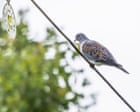
A turtle dove purrs softly among the reeds at Maxey Cut in Cambridgeshire, nearly drowned out by sedge warblers, willow warblers, and Cetti's warblers. The bird's presence marks a small victory for a species hunted toward extinction across Europe.
Turtle doves have vanished from much of their former range. Their population crashed as agricultural intensification stripped away seed-bearing plants and hunting pressure mounted in Mediterranean regions where the birds winter. Britain lost 98 percent of its breeding turtle doves between 1994 and 2014, according to the British Trust for Ornithology. Today fewer than 3,000 breeding pairs remain in the United Kingdom.
The Cambridgeshire flood-relief channel, with its tangle of scrubland and scattered willows, offers refuge. Turtle doves need warm margins with wild plants that produce the small seeds they eat. They also require places to roost undisturbed. At Maxey Cut, such habitat persists, drawing birds back from wintering grounds in West Africa.
The purring call Lambert describes is the male's territorial song, delivered with mechanical precision. It sounds nothing like other European doves. The bird cannot repeat this performance elsewhere if it dies. Each turtle dove lost represents breeding capacity permanently erased from a population teetering toward oblivion.
Across Europe, turtle dove recovery depends on habitat restoration and hunting restrictions. The European Union's Birds Directive nominally protects the species, yet legal killing continues in countries including France, Spain, and Italy, where the birds stop to refuel during migration. Conservationists have called for a hunting moratorium until populations recover.
At Maxey Cut, the flood-relief channel supports more than turtle doves. Sea trout and eels move through its waters. The ecosystem that sustains