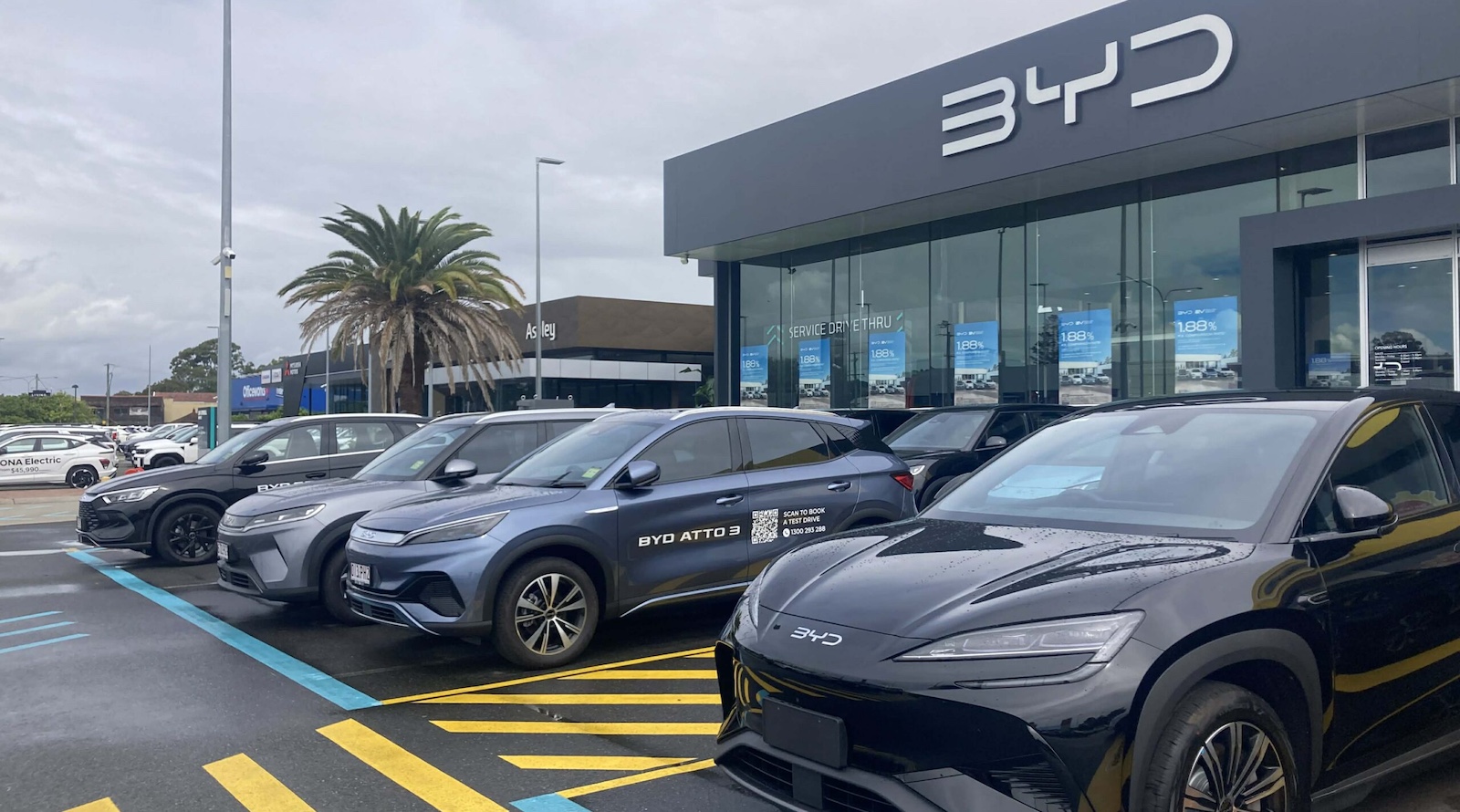
BYD exported 135,098 vehicles in April, surpassing Tesla's total global sales for the month. All BYD exports were battery electric or plug-in hybrid vehicles, marking a decisive shift in the global EV market landscape.
The Chinese automaker's export numbers reflect accelerating production capacity and international demand for affordable electric vehicles. BYD's domestic sales in China added substantially to its April total, positioning the company as the world's largest EV manufacturer by volume. Tesla sold fewer vehicles globally in April than BYD shipped outside China alone, a metric that underscores the competitive pressure facing the American manufacturer.
BYD's dominance stems from both scale and diversification. The company produces battery electric vehicles and plug-in hybrids across multiple price points and vehicle categories. Its battery manufacturing subsidiary, which supplies both internal demand and external customers, provides vertical integration advantages that competitors struggle to match. Domestic Chinese demand remains robust, while international markets in Europe, Southeast Asia, and Latin America absorb growing volumes of BYD exports.
Tesla maintains leadership in profit margins and brand value but faces volume disadvantages. The company's product lineup concentrates on fully battery electric vehicles without plug-in hybrid options. Manufacturing constraints at existing plants and delayed expansion projects have limited growth compared to rivals ramping production at multiple facilities simultaneously.
This April comparison highlights a structural shift in the automotive industry. Western manufacturers invested heavily in internal combustion engines for decades and now play catch-up in electrification. BYD benefited from China's aggressive EV adoption policies and domestic market scale that allowed rapid learning and cost reduction. The company's ability to export more vehicles than Tesla sells globally signals that price-competitive EVs from Chinese makers now command substantial global market share.
For Tesla, the metric illustrates competitive reality rather than diminished capability. However, the volume gap between BYD's exports alone and Tesla's total