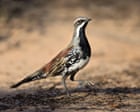
A birdwatcher in Australia's Mallee forest near Lake Gilles Conservation Park sacrificed breakfast to pursue a copperback quail-thrush after detecting its distinctive repetitive whistling call. The sighting occurred approximately five hours northwest of Adelaide, in one of Australia's interior regions.
Guide Steve Potter identified the bird's vocalization, prompting an immediate departure from camp despite the appeal of coffee and cornflakes. The strategy paid off when a large, plump bird emerged from beneath a bush and walked purposefully toward the observers.
The copperback quail-thrush occupies specialized habitat within Australia's Mallee woodland ecosystem. These birds remain elusive subjects for birdwatchers, making spontaneous sightings noteworthy. The Mallee forest region supports several endemic and threatened bird species adapted to semi-arid conditions. Lake Gilles Conservation Park protects critical habitat for these species within South Australia's interior.
This encounter reflects broader patterns in Australian ornithology. Many endemic species depend on intact Mallee vegetation, which faces ongoing threats from land conversion and climate stress. Professional guides like Potter play an essential role in documenting species distributions and behaviors across remote regions.
The willingness to prioritize wildlife observation over immediate creature comforts underscores the commitment required for serious birdwatching. In Australia's interior, such opportunities demand quick decisions and flexibility. The copperback quail-thrush sighting represents the type of unplanned wildlife encounter that field observation often yields, rewarding those who remain alert to environmental cues and responsive to guides' expertise.