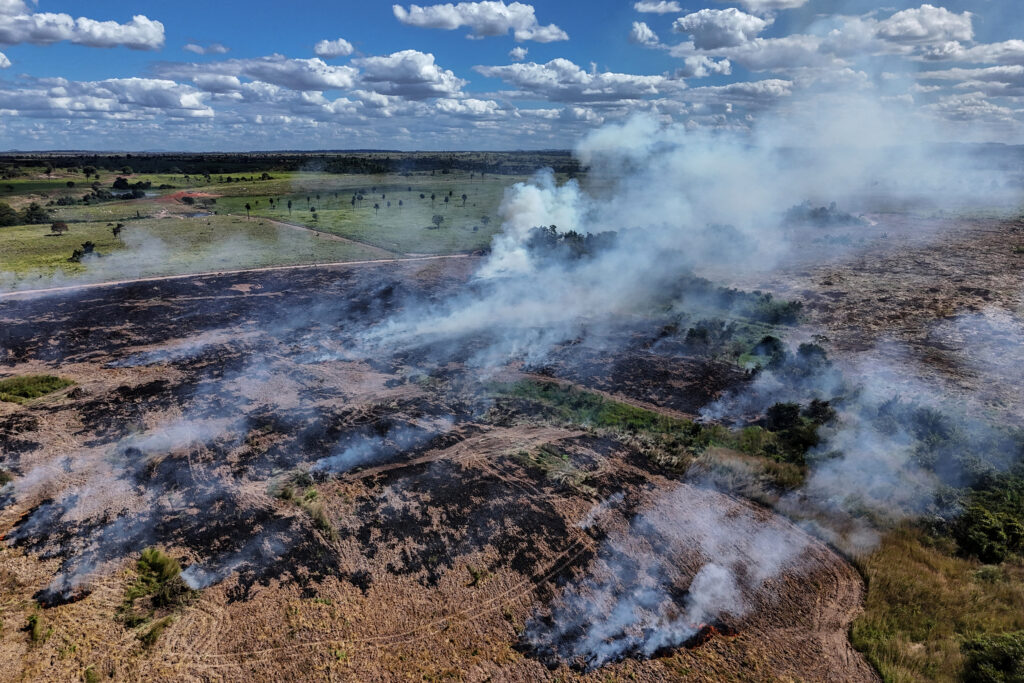
Brazil's Amazon deforestation fell 36 percent year-over-year between August 2025 and March 2026, reaching 1,460 square kilometers of forest loss during the period, according to data released by the Brazilian Human and Environment Amazon Institute, or Imazon. This marks the lowest deforestation rate in eight years.
The decline reflects intensified enforcement efforts and policy interventions implemented by the Brazilian government. President Luiz Inácio Lula's administration has deployed additional resources to combat illegal logging and land clearing, including increased military patrols in vulnerable regions and tighter coordination between environmental agencies.
The improvement carries global significance. The Amazon absorbs roughly 2 billion metric tons of carbon dioxide annually, making forest loss a direct driver of climate change. Deforestation in the region also destroys habitat for over 10 percent of Earth's species and disrupts rainfall patterns across South America and beyond.
However, the gains remain fragile. At current rates, the Amazon approaches a critical tipping point beyond which the ecosystem may shift irreversibly toward savanna. Scientists estimate this threshold lies near 20 to 25 percent cumulative forest loss. The region has already lost approximately 17 percent of its original cover.
Cattle ranching and soy cultivation continue driving the majority of deforestation despite the recent decline. Illegal mining also persists in protected areas, often tied to organized crime networks. Enforcement alone cannot solve the underlying economic incentives pushing land conversion.
International attention focuses on Brazil's progress. The nation hosts roughly 60 percent of the Amazon basin and holds significant responsibility for global climate stability. Other countries, particularly wealthy nations, have pledged funding tied to deforestation reductions through mechanisms like the Amazon Fund.
Sustainability groups caution against complacency. While the 36 percent reduction signals momentum, reversing decades of