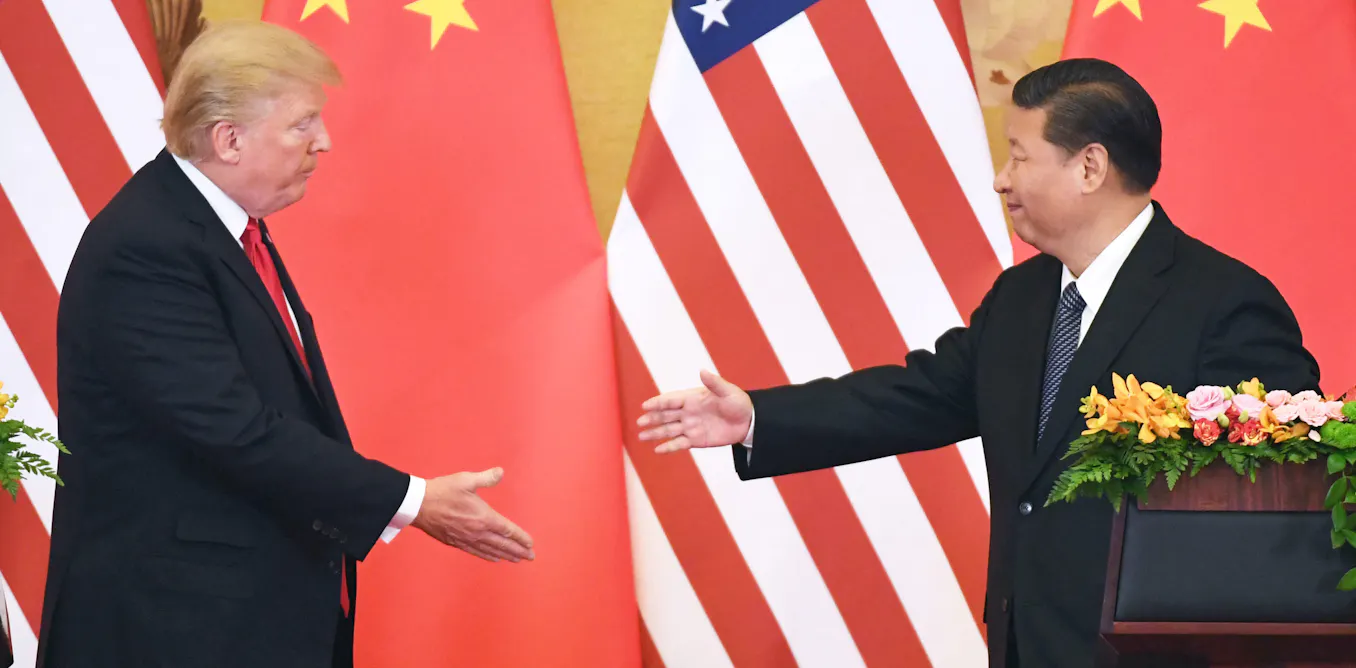
President Trump signaled a departure from decades of US diplomatic protocol by stating he intends to discuss arms sales to Taiwan directly with China's Xi Jinping. The announcement breaks with established practice under which the US negotiates Taiwan policy through indirect channels and avoids explicit confrontation over the island's military support.
The 1979 Taiwan Relations Act legally obligates Washington to provide Taiwan with defensive weapons. Since then, successive administrations have calibrated arms transfers carefully, treating the issue as sensitive but manageable within US-China relations. Trump's direct approach threatens this balance.
The shift carries environmental and climate implications. US-China relations anchor global cooperation on emissions reductions, renewable energy development, and climate finance. Heightened tensions over Taiwan could fracture the bilateral partnerships essential for meeting Paris Agreement targets. China leads global manufacturing of solar panels and battery components. Supply chain disruptions from geopolitical conflict would slow clean energy deployment worldwide.
Taiwan itself faces acute climate vulnerability. The island sits in a typhoon corridor and experiences rising sea levels that threaten its semiconductor manufacturing infrastructure. Cross-strait instability diverts resources from climate adaptation. Taiwan's tech sector drives renewable innovation globally, making regional stability economically tied to global decarbonization progress.
The Taiwan Relations Act requires the US to maintain Taiwan's defensive capabilities, but the manner and publicity of arms transfers matter for regional stability. Trump's public commitment to discuss this with Xi represents a rhetorical escalation that could trigger Chinese countermeasures, potentially including acceleration of military buildups that consume resources and increase emissions from expanded defense sectors.
Experts warn that shifting Taiwan policy unilaterally risks undermining the "One China" framework that has governed US-China relations since normalization. Environmental governance depends on sustained diplomatic channels. Competition over Taiwan could redirect political capital and financial resources away from climate commitments both nations have made.
The practical outcome remains unclear until the Trump-Xi meeting occurs