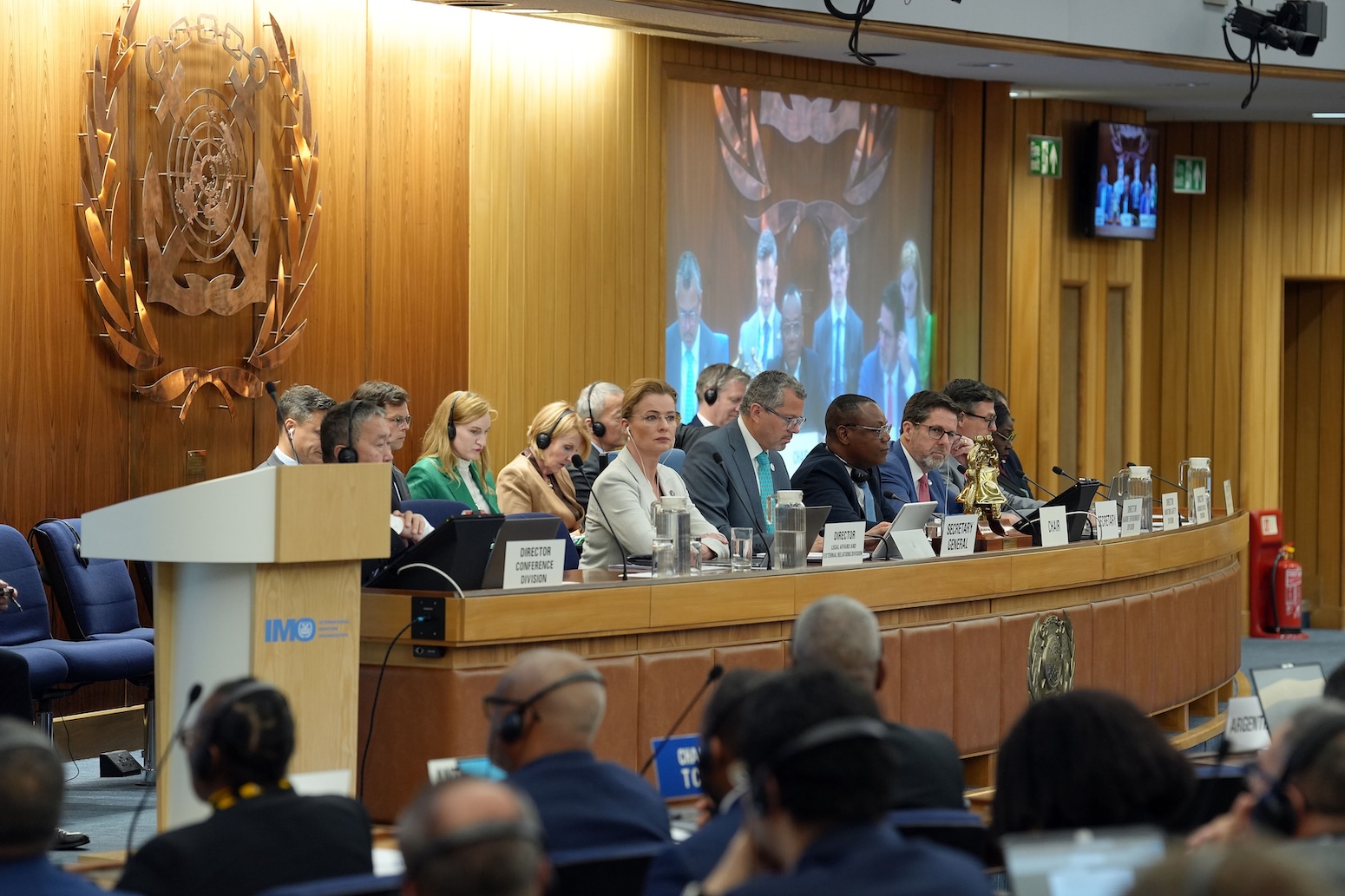
International negotiations on shipping emissions have regained momentum toward adopting a net-zero framework after a period of stalled discussions. The International Maritime Organization (IMO) convened member states to resolve outstanding disagreements that had threatened progress on one of the world's largest unregulated sources of greenhouse gases.
Shipping accounts for roughly 3 percent of global carbon dioxide emissions, equivalent to approximately 1 billion tons annually. The sector operates largely outside major climate agreements, making IMO action essential to meeting Paris Agreement goals. Most shipping regulations fall under the IMO's domain rather than national governments, giving the organization outsized influence over this hard-to-decarbonize industry.
The deal aims to establish binding commitments requiring the shipping sector to transition toward zero-carbon fuels and technologies by mid-century. Key provisions include interim targets to reduce emissions intensity and requirements for ships built after certain dates to comply with efficiency standards. Nations must also establish mechanisms to finance the transition, particularly for developing countries lacking capital for expensive retrofits and fuel switching.
Disagreements centered on the timeline for implementation, liability frameworks for shipowners, and cost-sharing arrangements. Low-lying island nations and developing economies pushed for faster timelines and stronger financial guarantees, citing their vulnerability to rising seas driven partly by emissions from ships servicing global trade. Oil-producing nations and shipping-dependent economies sought longer phase-in periods and liability protections.
The breakthrough involved compromise language committing countries to revisit targets by 2030, creating flexibility while maintaining forward momentum. The framework also established a fund to support technological innovation in zero-carbon shipping fuels, with contributions from both developed and developing nations scaled to their shipping fleets.
Industry observers note the deal's success depends on enforcement. Previous IMO regulations on fuel standards saw widespread noncompliance. Verification systems and penalties for violations remain underdeveloped. The framework also leaves significant questions about which fu