Hydrogen Vehicle Systems, a fuel-cell truck manufacturer backed by serious engineering talent, private funding, and public partnerships, has failed. The company's collapse exposes fundamental problems with hydrogen as a solution for heavy-duty freight transportation.
HVS was not marginal. It operated prototypes, secured partnerships, attracted investment, and targeted a market segment where hydrogen advocates insisted it belonged: zero-emission trucking for long-haul routes where battery-electric vehicles face range constraints. Yet despite these advantages, the company could not achieve commercial viability.
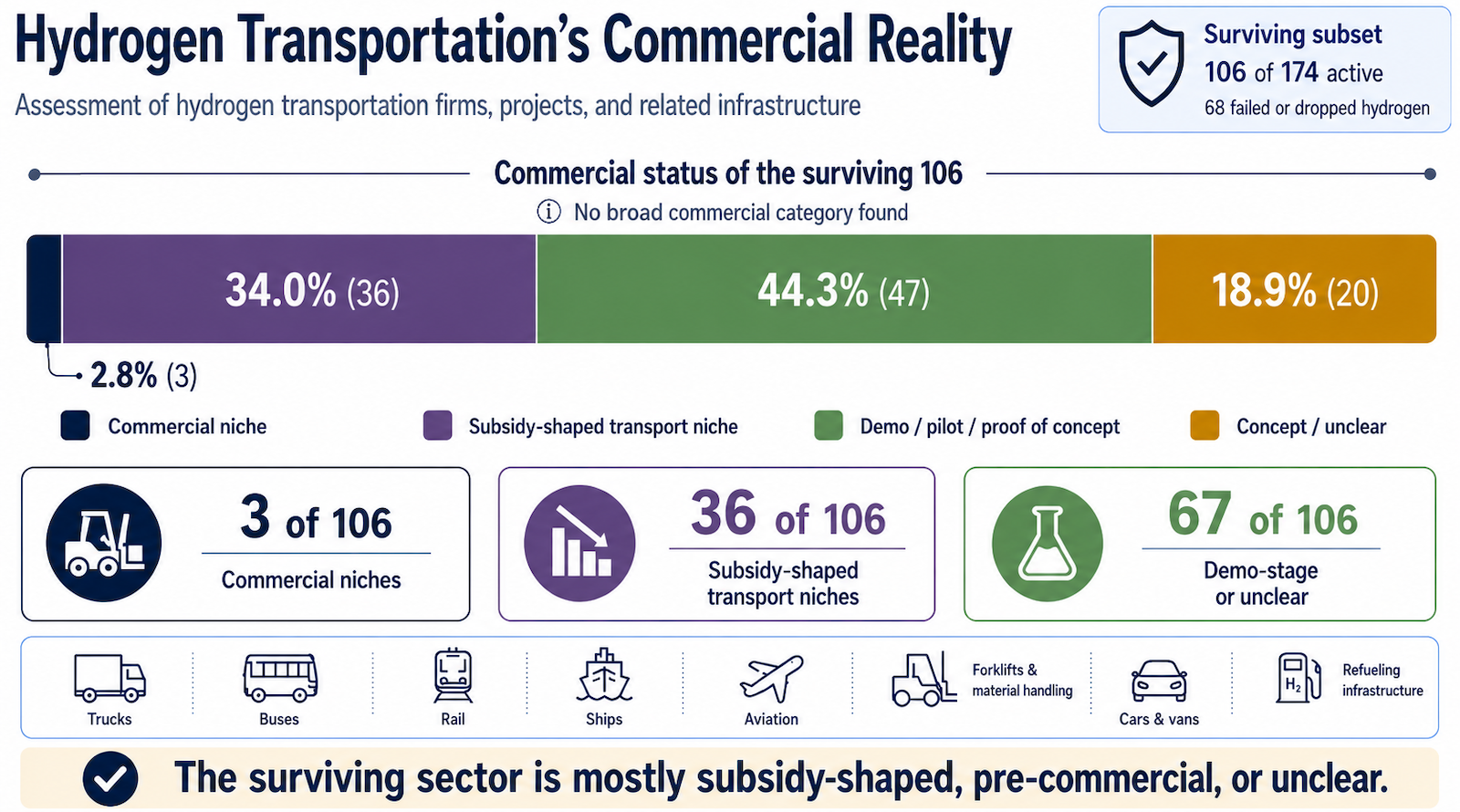
The failure points to a recurring pattern in hydrogen transportation. The technology requires enormous government subsidies to remain economically competitive. Pilot programs stretch across years with limited scalability. Commercial applications remain confined to narrow niches where other technologies cannot operate, a constraint that limits market size.
Heavy-duty freight represents one of hydrogen's most credible use cases. Trucks travel long distances and operate continuously, making battery recharging logistically complex. Hydrogen fuel cells offer quick refueling and extended range. Yet infrastructure remains sparse. Hydrogen stations capable of fueling heavy trucks exist in limited numbers. Building a nationwide hydrogen fueling network requires decades of investment and coordination across private companies, state agencies, and federal programs.
The economics tell a blunt story. Hydrogen fuel-cell trucks cost substantially more to manufacture than diesel alternatives or battery-electric trucks. Operating costs remain high without subsidies. Fuel prices depend on hydrogen production methods, which today rely primarily on natural gas reforming with significant carbon emissions, undermining the zero-emission argument unless production shifts to electrolysis powered by renewable energy.
Other manufacturers continue hydrogen development. Toyota, Hyundai, and smaller firms maintain fuel-cell programs. Government agencies in the U.S., Europe, and Asia continue funding hydrogen infrastructure pilots. But HVS's exit signals that market forces alone cannot sustain hydrogen transportation at scale.