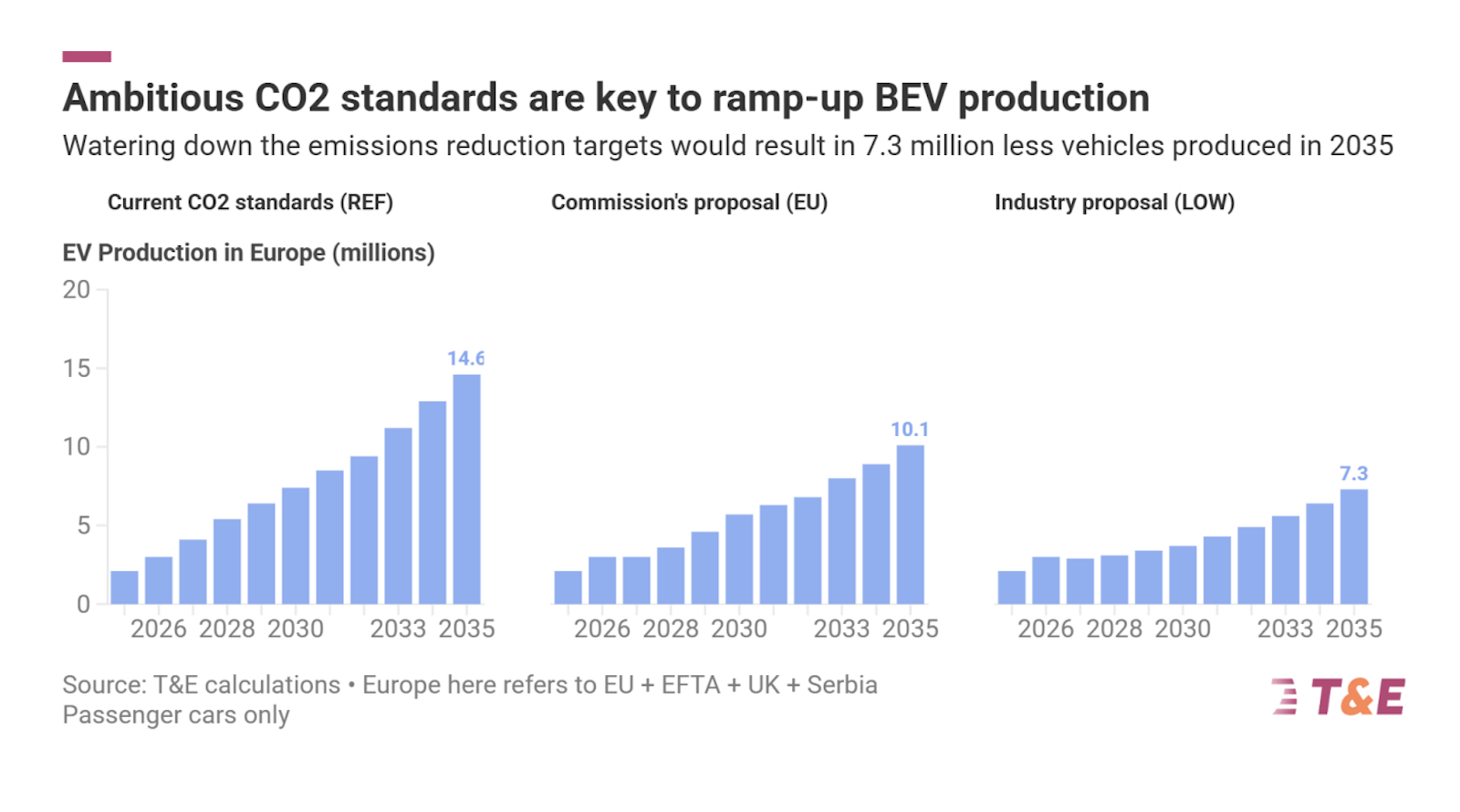
European policymakers risk derailing billions in electric vehicle investment by weakening the EU's car CO2 targets, according to a new study examining the "industrial opportunity cost" of proposed regulatory changes.
The EU currently debates stringent emissions rules that manufacturers must meet. These standards have catalyzed major private sector commitments to EV production, battery manufacturing, and component supply chains across the continent. Companies have announced substantial capital deployment tied to these regulatory certainties.
Proposed weakening of CO2 targets threatens this momentum. Manufacturers invested in EV infrastructure based on the assumption that strict emissions standards would remain in place, making battery and electric powertrains economically essential. If targets loosen, the business case for these investments deteriorates immediately.
The study quantifies what Europe stands to lose. Weakened rules reduce demand signals for EV technology, potentially deterring facility construction, workforce hiring, and supply chain development. Battery gigafactories currently planned or under construction depend on guaranteed EV sales volumes. Lower CO2 targets mean automakers face less pressure to transition from internal combustion engines, directly undermining battery demand forecasts.
This creates an industrial paradox. Europe positioned itself to lead global EV manufacturing. Automotive suppliers across Poland, Germany, Italy, and other member states committed to electrification infrastructure. Venture capital and government subsidies flowed toward battery startups and component makers. Weakening CO2 targets signals regulatory retreat, forcing investors to recalculate returns and potentially reallocate capital elsewhere—particularly toward Asia, where EV policies remain aggressive.
The stakes extend beyond investment. EV manufacturing jobs, supply chain resilience, and technological competition with China depend on maintaining regulatory pressure. Weakened standards preserve short-term profits for incumbent automakers but cede long-term industrial capacity to competitors with stronger emission rules.
EU policymakers face pressure from traditional automakers lobbying