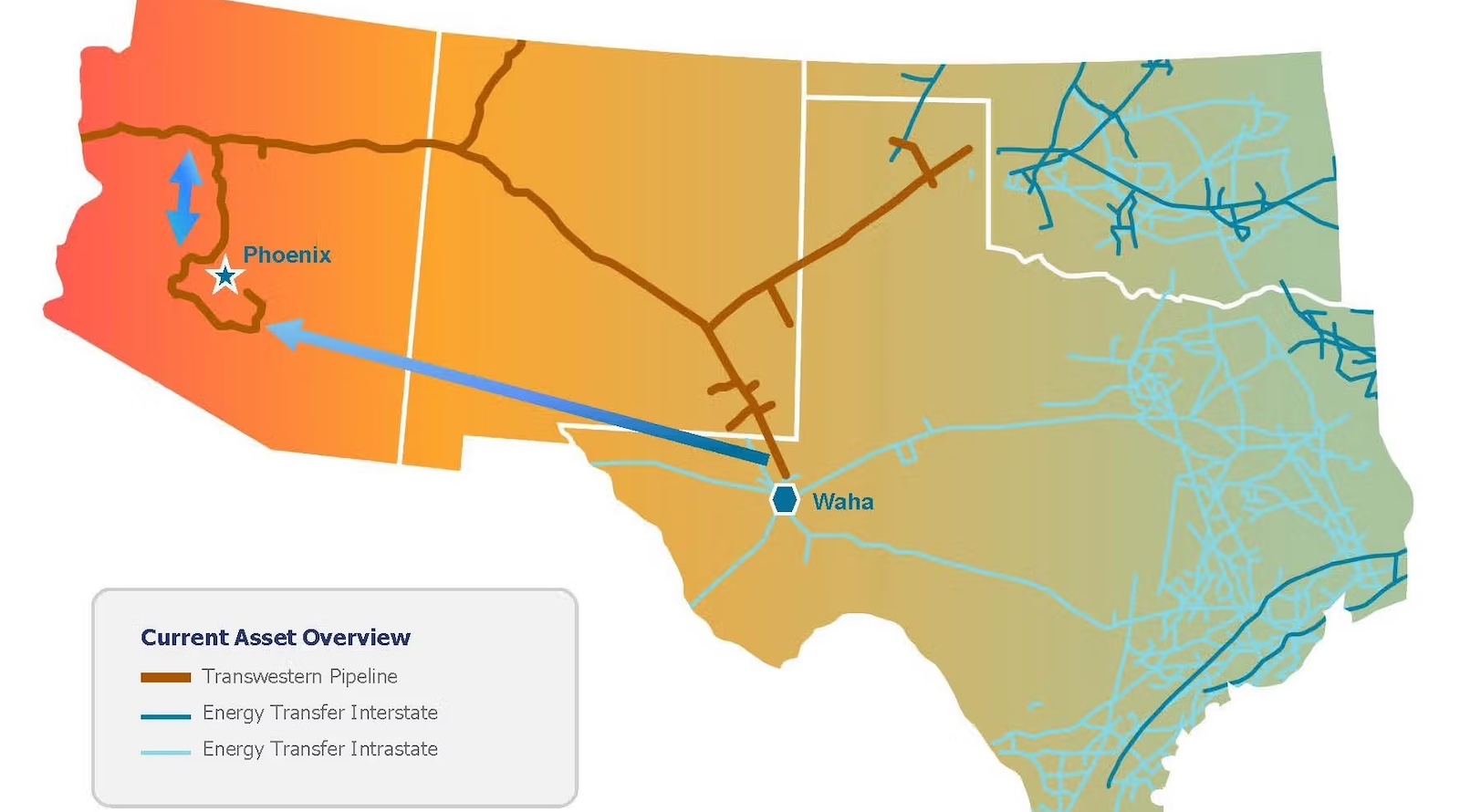
Arizona Governor Katie Hobbs announced support for the Desert Southwest Pipeline, a 500-mile methane gas infrastructure project spanning Texas, New Mexico, and Arizona. The decision drew immediate criticism from environmental organizations including Sierra Club Grand Canyon Chapter, Chispa Arizona, and Solar United Neighbors.
The groups argue the pipeline locks the Southwest into decades of continued natural gas consumption at a time when climate science demands rapid fossil fuel phase-out. Methane, the primary component of natural gas, carries a global warming potential 28 to 34 times higher than carbon dioxide over a 100-year period, according to the EPA. Leaked methane from pipeline infrastructure amplifies this climate impact.
The Desert Southwest Pipeline represents a major commitment to gas infrastructure during a period when U.S. climate goals increasingly depend on electrification and renewable energy deployment. Arizona has seen substantial solar capacity growth, with the state ranking fifth nationally in cumulative solar installations. Renewable energy advocates argue new gas pipelines contradict the state's renewable energy potential and federal climate commitments.
Governor Hobbs' support aligns the state with natural gas industry interests but contradicts positions held by climate-focused policymakers in neighboring California, where similar pipeline projects face regulatory scrutiny. The pipeline project requires approval from federal agencies and state regulatory bodies before construction can begin.
Environmental groups contend the investment diverts capital from renewable energy infrastructure development. They point to Arizona's growing solar manufacturing base and the state's natural advantages for wind and solar generation as alternatives to gas expansion.
The decision reflects ongoing tensions in energy policy between climate commitments and fossil fuel industry influence. Arizona's dependence on Colorado River water, threatened by drought intensified by climate change, adds urgency to the state's climate decisions. Groups pledge continued opposition through regulatory proceedings and public advocacy.