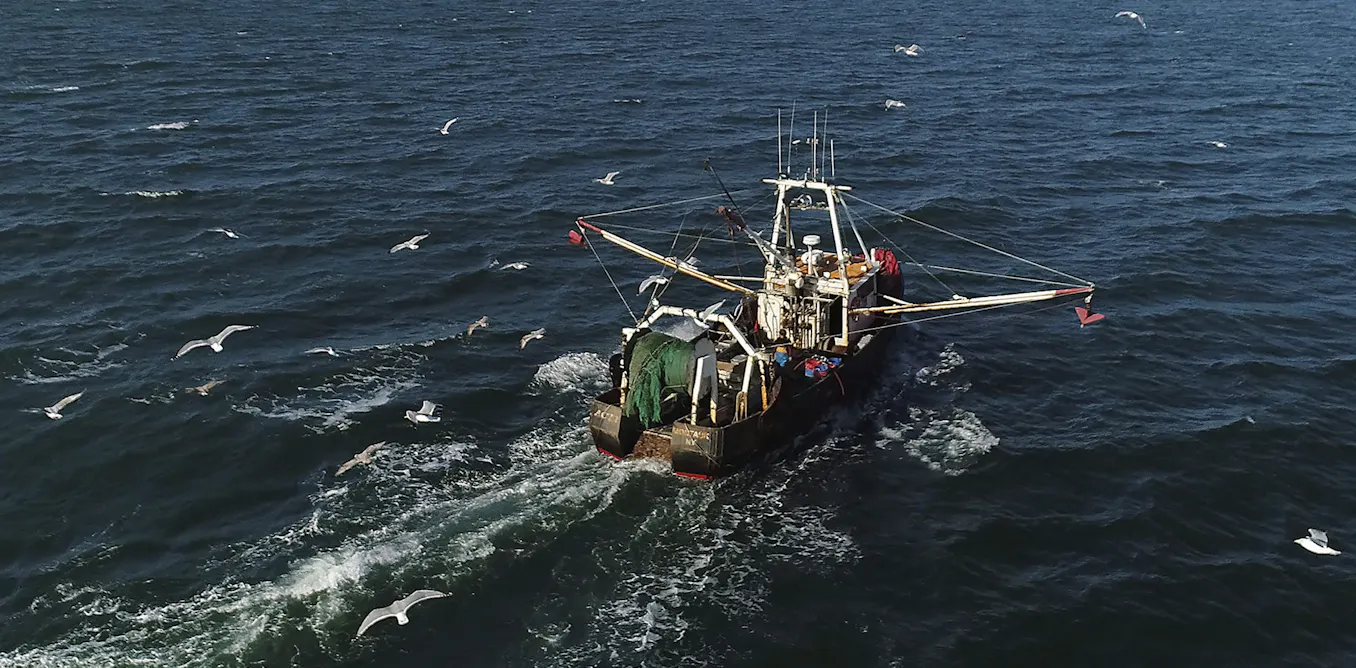
Bottom trawling destroys ocean floor ecosystems at a scale that rivals deforestation on land. The practice involves dragging weighted nets across the seafloor, capturing everything in their path and obliterating habitats that took decades or centuries to develop.
Research quantifies the damage. Studies show bottom trawling affects roughly 1.5 million square kilometers of ocean floor annually. The UN Food and Agriculture Organization reports that industrial bottom trawlers remove approximately 0.97 billion tonnes of biomass from ocean ecosystems each year, far exceeding the weight of fish actually kept for sale.
The ecological toll runs deep. Benthic habitats, including coral gardens and sponge communities, suffer irreversible damage from a single trawl pass. These ecosystems recover slowly if at all. Cold-water corals, which can live thousands of years, fragment into rubble within seconds of net contact. The displaced sediment clouds water columns, smothering filter feeders and disrupting oxygen availability across the seafloor.
Bottom trawling also drives bycatch. The indiscriminate nets capture juvenile fish, non-target species, and marine mammals, most of which die before nets surface. This removes breeding stock from already stressed populations and disrupts food webs at multiple levels.
Economically, bottom trawling operates on razor margins. Fuel subsidies and fishing access agreements in many countries keep the practice artificially profitable despite mounting environmental debt. The EU, China, and Russia operate the largest bottom trawling fleets, with operations extending into international waters where enforcement remains minimal.
Policy responses lag behind evidence. The International Seabed Authority proposed restrictions on deep-sea mining that implicitly acknowledge habitat fragility, yet marine protection for bottom-trawled areas remains voluntary in most jurisdictions. Some nations have closed sections of their exclusive economic zones, but these remain exceptions rather