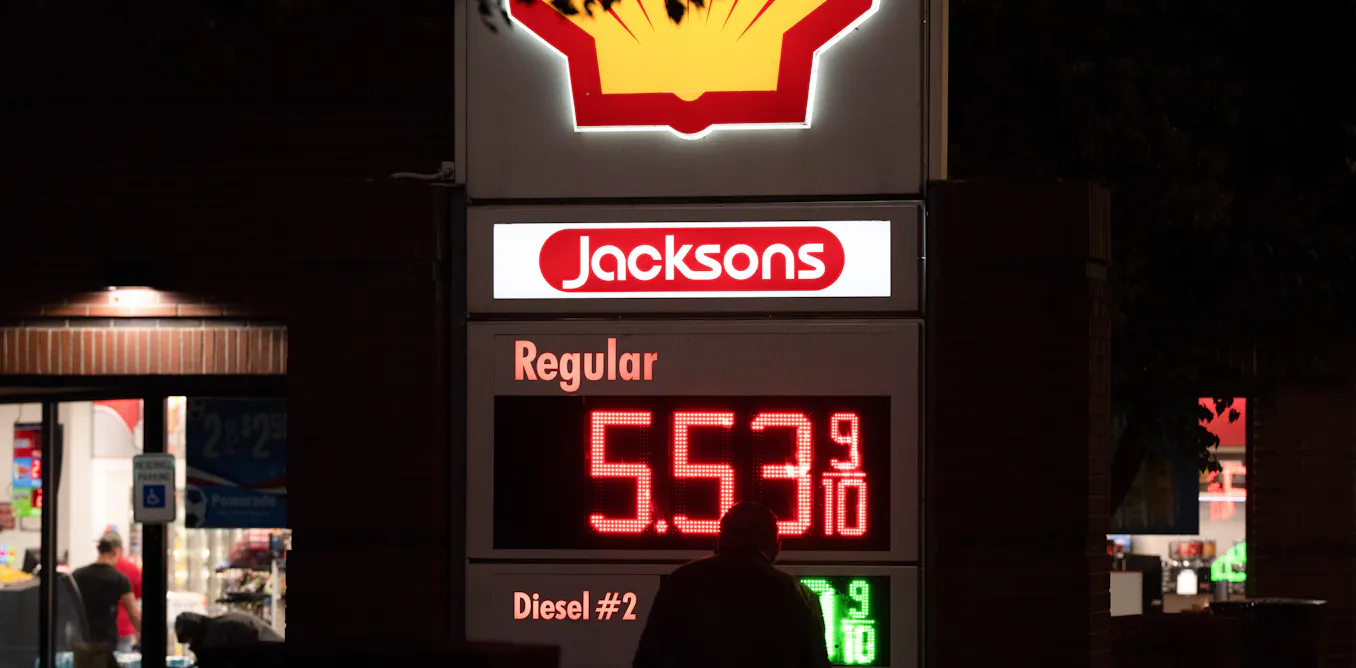
A federal gas tax suspension would deliver minimal relief at the pump, reducing prices by roughly 4 percent nationwide and even less in high-tax states like California, according to analysis of fuel pricing mechanics.
The federal excise tax on gasoline stands at 18.4 cents per gallon. While this represents a direct cost, it comprises only a small fraction of total pump prices. Crude oil accounts for the largest portion of what drivers pay, typically 50 to 60 percent of the final price. Refining costs, distribution, and retail markups make up the remainder.
A temporary suspension of the federal tax, which Congress would need to authorize, removes approximately 4 cents from the average gallon price. This translates to roughly 4 percent savings at current national averages around $3.50 per gallon. States with their own gas taxes on top of federal levies would see even smaller percentage reductions. California, which charges 68.1 cents per gallon in state tax, would experience diminished benefits from federal suspension alone.
Oil markets function on global pricing. The crude oil component of gas prices reflects international supply and demand dynamics, geopolitical events, and futures trading. Removing a small federal tax does not shift these underlying forces. Refineries operate at capacity constraints. Their margins depend on throughput and operational efficiency, not tax policy. Distribution networks and retailer profit margins similarly remain unaffected by federal tax changes.
Historical attempts to suspend fuel taxes have produced results consistent with these projections. During 2008, discussions around gas tax suspension yielded little consumer enthusiasm once the actual savings became clear. Industry economists found that tax holidays generated minimal price reductions because market structure, not tax policy, determines the bulk of pump prices.
Policymakers considering tax suspension as a solution to high gas prices face a structural reality. The federal tax represents a lever that moves a