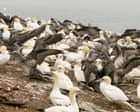
A 55-year study of northern gannet eggs in Canada's St Lawrence Seaway basin documents a dramatic decline in per- and polyfluoroalkyl substances (PFAS), with some compounds dropping as much as 74 percent. The research, published in the Journal of Applied Toxicology, tracks PFAS accumulation from the 1960s through 2015.
Concentrations climbed steadily as industrial use of these synthetic chemicals expanded, peaking in the late 1990s and early 2000s when PFAS compounds were integral to manufacturing processes for non-stick coatings, aqueous film-forming foams, and water-resistant textiles. The subsequent decline follows regulatory restrictions on specific PFAS formulations in North America and Europe.
Researchers examined eggs collected from Bonaventure Island in Quebec across multiple decades. The findings show that PFAS bioaccumulation in wildlife responds to policy interventions, though the chemicals persist in the environment for decades. PFAS contaminate water supplies, accumulate in fatty tissues, and resist degradation, earning them the nickname "forever chemicals."
The study measured compounds including perfluorooctane sulfonyl fluoride (POSF)-based chemicals and legacy PFAS formulations. As manufacturers phased out restricted compounds under regulations like the Stockholm Convention and national environmental protection frameworks, seabird tissue concentrations reflected those shifts with a lag period typical of ecosystem recovery.
However, the data also reveals ongoing PFAS presence at detectable levels, indicating continued contamination despite regulatory action. Alternative PFAS compounds introduced as replacements show concerning patterns of bioaccumulation in some cases. Northern gannets serve as sentinel species for marine ecosystem health because they occupy high trophic levels and concentrate pollutants through food chains.
The study provides evidence that environmental regulations targeting specific chemical classes produce