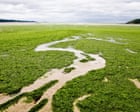
A toxic seaweed bloom in Brittany, France has killed at least one person and sickened others through exposure to hydrogen sulfide gas, prompting a family to launch an investigation into the deadly phenomenon.
Jean-René Auffray died on September 8, 2016, after running near mudflats where decomposing seaweed accumulated. His wife Rosy discovered their dog had returned from the same area with a coating of foul-smelling algae and behavioral changes. The dog's fur reeked of rotten eggs, a telltale sign of hydrogen sulfide emissions from decaying biomass.
The bloom stems from agricultural runoff in Brittany, which fuels massive algal growth. As the seaweed dies and decomposes on beaches and mudflats, anaerobic bacteria break down organic matter and release hydrogen sulfide gas. This colorless but highly toxic compound causes respiratory distress and can prove fatal at high concentrations.
The Auffray family's investigation revealed multiple deaths linked to the blooms. Hydrogen sulfide exposure damages lung tissue and can trigger fatal pulmonary edema, where fluid accumulates in the lungs. The gas also crosses the blood-brain barrier, disrupting oxygen transport.
Brittany's agricultural region produces intensive livestock farming and fertilizer application. Nutrient runoff feeds Ulva lactuca, a green seaweed species that now blankets kilometers of coastline each summer. As temperatures rise, decomposition accelerates and hydrogen sulfide production intensifies.
Local authorities initially dismissed the seaweed as a nuisance. The family's persistence forced recognition that the blooms posed a genuine public health threat. France's government eventually acknowledged the problem and began exploring solutions including seaweed removal and stricter agricultural nutrient controls.
The Brittany case demonstrates how eutrophication from agricultural pollution can