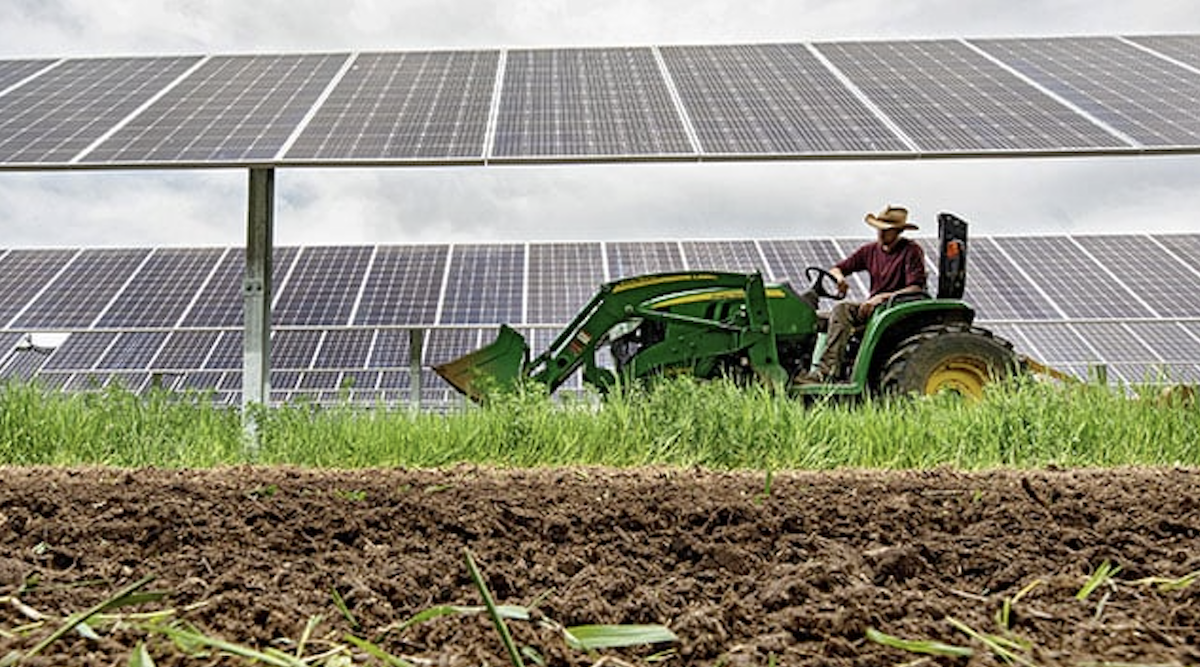
Renewable energy installations on agricultural land offer struggling farmers a revenue stream that can sustain operations without forcing land sales. Wind turbines and solar arrays generate lease payments that provide stable income alongside traditional crops and livestock.
Farmers across the U.S. increasingly host utility-scale renewable projects on their property. These installations typically occupy only a portion of working land, allowing continued agricultural use. Lease agreements guarantee annual payments ranging from hundreds to thousands of dollars per acre, depending on project type and location.
The model addresses a persistent challenge in American agriculture. Farm income volatility, rising input costs, and consolidation pressure have pushed many operators toward the margin. Between 2019 and 2021, the number of farms generating income below production costs climbed. For operators with marginal land unsuitable for productive crops, renewable leases provide an alternative without abandonment.
Solar farms on marginal ground preserve family operations in regions where commodity prices struggle to cover expenses. Wind projects in Great Plains states leverage consistent resources while maintaining ranching activities. Dual land use, called agrivoltaics in some cases, allows grazing or crop production beneath and around installations.
States have recognized this potential. Iowa, Texas, and Kansas lead in renewable energy deployment partly because farmer participation reduces permitting friction. Landowner support transforms projects from external impositions into community investments with direct economic benefit.
The arrangement carries trade-offs. Leases typically run 20 to 40 years, locking land into renewable infrastructure. Some farmers report concerns about equipment maintenance impacts or visual effects on operations. Local opposition to industrial-scale installations persists in certain communities despite economic arguments.
Still, revenue certainty appeals to operators facing unpredictable commodity markets. A farmer receiving $10,000 annually from a solar lease gains predictable income that weather and crop prices cannot disrupt. For family farms operating on margins of five to ten percent, this stability proves