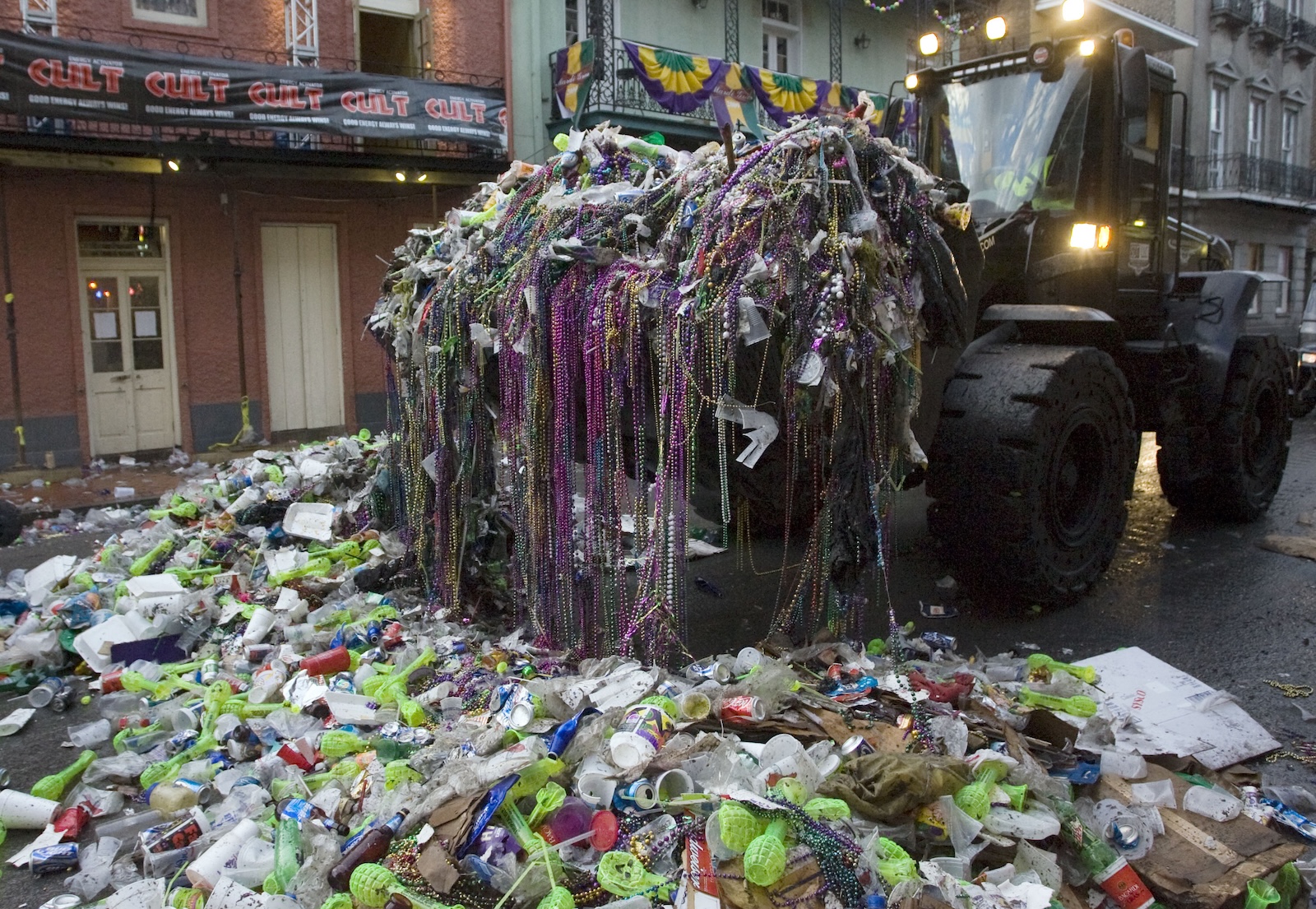
New Orleans collected 1.4 tons of waste from this year's Carnival parade routes, breaking the city's previous record for festival debris. The trash comprised beads, beer cans, plastic cups, and other single-use materials discarded during the weeks-long celebration.
City officials acknowledged the disposal crisis even as they promoted cleanup efforts. The record tonnage reflects both increased parade attendance and persistent littering habits among revelers and spectators. New Orleans has implemented waste reduction initiatives in recent years, including bead collection programs and partnerships with local organizations to deploy additional trash receptacles along parade corridors.
The mounting waste presents a practical challenge for municipal sanitation services. The city's Department of Sanitation must mobilize crews immediately after each parade to clear routes before the next event begins. Beads pose particular problems. Millions of strands end up in streets and catch basins, eventually flowing into the city's strained drainage system during heavy rains. The plastic beads, predominantly manufactured overseas, persist in the environment for decades.
Environmental advocates have pushed for regulatory changes. Some proposals include requiring parade throws to meet biodegradability standards or limiting the quantity of beads distributed from floats. The krewe organizations that organize parades have resisted mandatory restrictions, citing tradition and operational costs.
The contradiction between cleanup campaigns and escalating debris reflects deeper tensions in how the city manages its most profitable tourism event. Marketing emphasizes Carnival's cultural significance while generating revenue that sustains local businesses and city services. Yet the environmental toll accumulates annually, with waste destined for landfills and storm drains.
New Orleans generates approximately 4,600 tons of trash daily under normal circumstances. Carnival adds roughly 1.4 tons concentrated over a compressed timeframe in specific neighborhoods, straining collection infrastructure. The city has not announced new policies to reduce future waste despite setting the recent record.