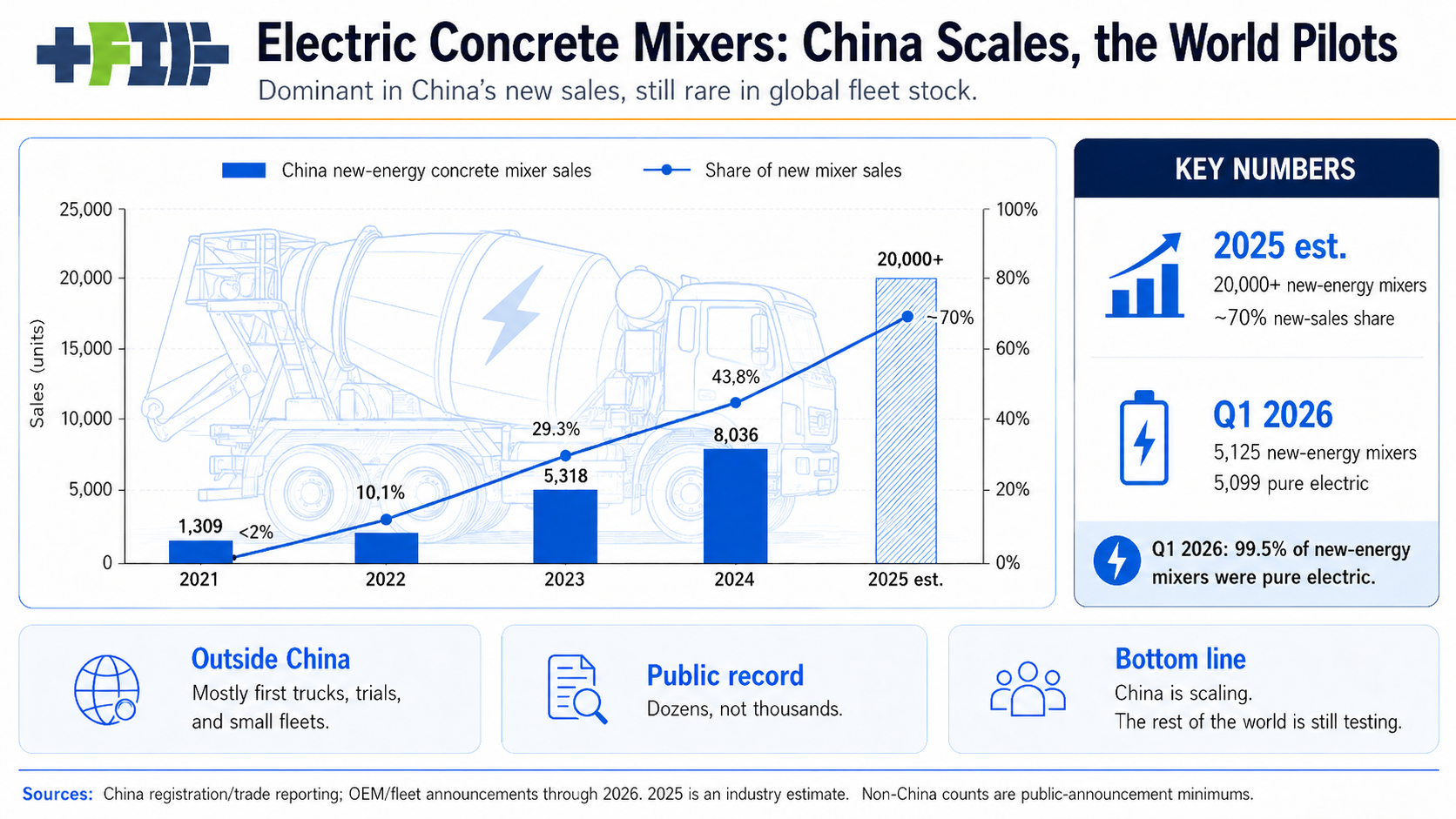
China's rapid adoption of battery-electric concrete mixers demonstrates that heavy-duty vehicle electrification can accelerate faster than many governments and manufacturers anticipated, exposing complacency in slower-moving markets.
Electric concrete mixers shifted from a niche product to a major sales category in China within five years. The vehicles' technical requirements fit battery technology's current capabilities. Concrete mixers operate on predictable routes with frequent depot returns, enabling overnight charging. The drum rotation requires modest power compared to long-haul trucking, making batteries economically viable without waiting for next-generation chemistry breakthroughs.
China's domestic manufacturers capitalized on this opportunity. Companies like XCMG and Zoomlion began mass-producing electric mixers as oil prices rose and emissions regulations tightened. By 2025, electric concrete mixers represented a substantial portion of new mixer sales in major Chinese markets. Cities including Beijing and Shanghai incentivized electric mixer purchases through subsidies and preferential purchasing policies for construction projects.
The concrete mixer trajectory matters because it reveals what happens when manufacturers optimize for existing battery constraints rather than waiting for perfect conditions. The vehicles prove that electrification in heavy transport does not require revolutionary battery advances across every application simultaneously.
Western truck manufacturers and governments have largely treated heavy-duty electrification as a distant challenge. Many assumed the sector would lag cars by a decade or more. Regulators in Europe and North America set emissions targets for 2035 or 2040. Truck makers pursued incremental diesel efficiency improvements while dedicating limited resources to battery options.
China's concrete mixer boom exposes this delay risk. If Chinese manufacturers capture market share in adjacent heavy vehicle categories using proven electric platforms, Western competitors face compressed development timelines with less opportunity for pilot programs or gradual market transitions.
The warning extends beyond concrete. Battery-electric dump trucks, sweepers, and specialized vehicles operating in defined geographic