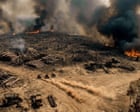
A Brazilian documentary film presents a dystopian scenario in which a far-right coup succeeds in dismantling democratic institutions and ceding control of the Amazon rainforest to the United States. The film, titled "Vitória Régia," imagines a 2025 in which Brazil's president is assassinated, Congress is dissolved, and the world's largest rainforest becomes an American territory stripped for oil extraction and resource exploitation.
The narrative device serves as both political warning and environmental alarm. Director constructs scenes depicting U.S. military occupation of the Amazon, including oil refineries constructed within the forest and nationalist monuments erected to symbolize American sovereignty over Brazilian land. The film employs dark satire to expose how geopolitical instability and authoritarianism directly threaten the planet's most biodiverse ecosystem.
The timing reflects genuine anxieties in Brazil. Former far-right president Jair Bolsonaro faced investigation for his alleged involvement in coup planning, with evidence suggesting coordination with military figures and political allies. During his 2018-2022 administration, deforestation rates in the Amazon surged, with illegal logging, cattle ranching, and mining claiming vast tracts of protected forest annually. Between 2019 and 2022, Brazil lost roughly 1.5 million hectares of Amazon forest per year.
The film particularly highlights consequences for Indigenous peoples who inhabit and steward approximately 28 percent of the Amazon. Indigenous territories contain some of the lowest deforestation rates in the region, with their land management practices proven effective at carbon sequestration and biodiversity protection. A foreign-controlled Amazon would eliminate Indigenous sovereignty and accelerate both environmental destruction and cultural genocide.
"Vitória Régia" functions as speculative climate fiction grounded in recognizable political trajectories. It dramatizes how authoritarian governance and foreign interference compound ecological crisis. The documentary argues