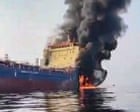
A seafarer aboard the tanker MKD Vyom survived a direct strike to the vessel's engine room on March 1 during escalating military tensions in the Gulf of Oman. The blast killed at least one crew member, Dixit Solanki, and left the ship engulfed in flames and smoke.
In an exclusive account, a survivor identified as Basis described the moment of impact. "Everything went black," he recounted. "For one or two seconds, I was knocked out." He witnessed immense shock waves followed by a fireball that filled the engine room with thick black smoke and fire pouring downward through the compartment.
The MKD Vyom represents the first documented fatal casualty from direct military strikes on commercial shipping in the Gulf of Oman corridor. The region carries roughly one-third of the world's seaborne oil trade, making attacks on tankers and cargo vessels a serious threat to global energy security and maritime safety.
The incident occurred amid escalating US and Israeli airstrikes against Iran, which has retaliated through proxy forces that target commercial shipping traversing the strategically vital waterway. These attacks disrupt supply chains, increase shipping insurance costs, and force vessels to reroute around the region.
Seafarers working the Gulf of Oman face heightened danger. Many crews lack adequate warning systems to detect incoming threats. The loss of Solanki underscores the human cost of regional military conflict extending into civilian maritime commerce.
The strike on the MKD Vyom demonstrates how geopolitical tensions directly endanger merchant mariners whose ships operate in contested waters. Commercial shipping remains caught between warring parties with little protection or recourse.
THE BOTTOM LINE: Military strikes on commercial tankers in critical shipping lanes kill civilian crews and disrupt energy markets relied upon by billions globally.