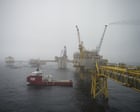
Norway's government approved reopening three North Sea gasfields closed for nearly three decades and authorized exploration in 70 additional locations across the North Sea, Barents Sea, and Norwegian Sea. The decision follows price spikes in oil and gas markets triggered by geopolitical tensions in the Middle East following February's US and Israeli military action against Iran.
Environmental groups and fossil fuel opponents launched immediate backlash against the approvals. The timing reflects Oslo's calculation that energy supply disruptions from regional conflict justify expanding domestic hydrocarbon production to meet market demand.
The reopenings target fields inactive since the mid-1990s. Norway, Europe's largest gas supplier outside Russia, has maintained significant fossil fuel extraction despite its climate commitments and renewable energy leadership. The nation supplies approximately one-quarter of Europe's natural gas, a dependency that has intensified since Russia's invasion of Ukraine restricted energy flows.
Energy markets have remained volatile since February's escalations in the Middle East. Brent crude oil prices spiked, and natural gas costs climbed across European exchanges. Norway's government framed the expansion as a necessary response to supply constraints and energy security concerns for European allies.
The decision contradicts Norway's stated climate objectives. The country has committed to carbon neutrality by 2030 and pledged substantial climate finance to developing nations. Simultaneously, it continues licensing new oil and gas exploration and production. This contradiction reflects persistent tensions between Norway's economic dependence on fossil fuels and its international climate positioning.
Environmental organizations condemned the approvals as inconsistent with climate science. Opening 70 new exploration zones locks in decades of additional emissions and infrastructure investment incompatible with limiting warming to 1.5 degrees Celsius, critics argued.
The 70 licenses span three separate sea regions and represent some of the largest exploration allocations Norway has granted in recent years. Companies can now conduct seismic surveys and drilling operations across