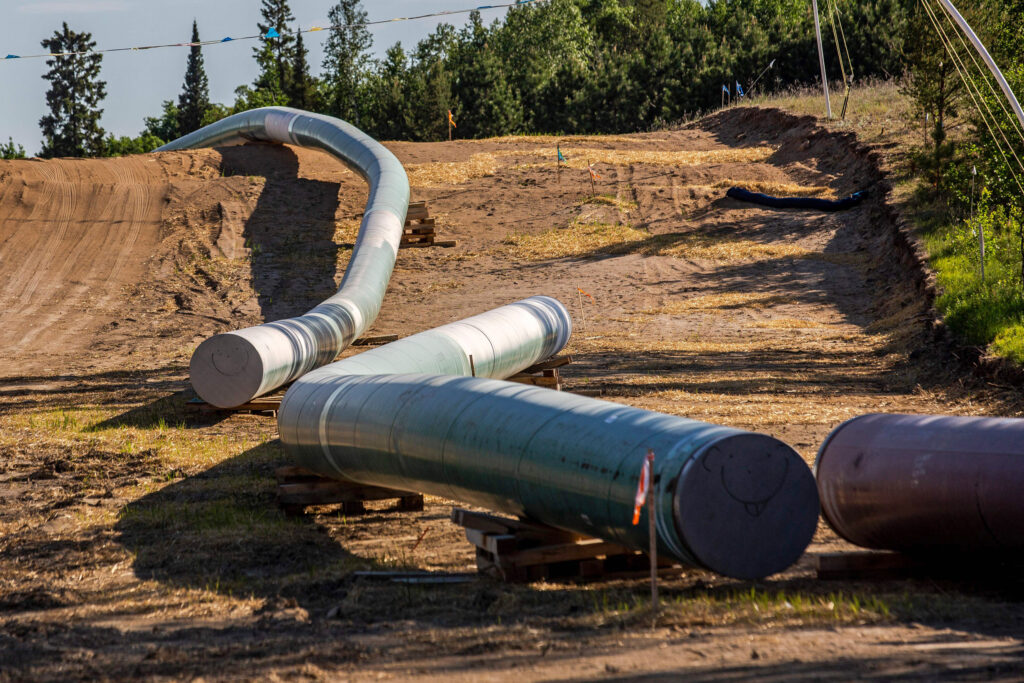
Enbridge, a Canadian pipeline company, announced plans in late April to construct a 28-mile natural gas pipeline through Chatham County in central North Carolina, running from Siler City to Moncure. The project prompted immediate pushback from landowners who received notices via certified mail from the company's legal representatives, signaling the formal process of acquiring right-of-way easements across private property.
The pipeline expansion reflects natural gas infrastructure development continuing across the Southeast despite climate commitments. Natural gas combustion accounts for roughly 30 percent of U.S. greenhouse gas emissions from energy production. Pipeline projects lock in decades of fossil fuel infrastructure and consumption patterns, typically operating for 50 to 80 years.
Local opposition centers on property rights, environmental concerns, and construction impacts. Landowners face pressure to grant easements that grant Enbridge permanent access to their land. The company can use eminent domain to force acquisition if negotiations fail, a power granted through federal pipeline regulations overseen by the Federal Energy Regulatory Commission.
The project emerges as North Carolina increasingly confronts energy transition questions. The state's electric utilities remain heavily dependent on natural gas generation, which supplied roughly 40 percent of in-state electricity in 2023. Renewable energy expansion under state law requires utilities to source 70 percent of electricity from renewable sources by 2030, potentially reducing demand for new gas infrastructure.
Environmental groups point out that new pipeline construction contradicts climate targets. The infrastructure locks in decades of methane emissions from gas extraction, processing, and combustion. The EPA estimates methane leakage from natural gas systems contributes 3 percent of total U.S. greenhouse gas emissions.
Enbridge operates the largest natural gas distribution system in North America and has faced multiple litigation battles over pipeline projects across multiple states. The company frames the Chatham County pipeline as essential for regional energy security and