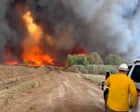
The Hazen fire near Buckeye, Arizona had consumed approximately 400 hectares (1,000 acres) as of Sunday evening, with firefighters unable to contain the blaze. The fire ignited Saturday afternoon in rural Arizona and showed zero containment through the following day, forcing crews to pursue active suppression operations into Monday.
Local authorities reported no evacuations or structural damage to homes as of the latest update, though the rapidly spreading fire threatened surrounding areas. The uncontained status indicated the blaze continued advancing faster than suppression efforts could manage.
Wildfires across Arizona have intensified as spring conditions create elevated fire risk. The state experiences longer fire seasons and larger burns due to hotter, drier conditions linked to warming temperatures. Arizona's wildfire season now typically spans from late April through October, several weeks longer than historical norms.
The Hazen fire's rapid spread reflects broader patterns in the western United States, where fire seasons have lengthened by several months over the past two decades. Research from the University of Montana shows wildfire season in the western U.S. now starts roughly 2.5 months earlier than it did in the 1970s.
Crews deployed standard suppression tactics including ground-based firefighters and aerial support where available. The Arizona Department of Forestry and Fire Management coordinates response operations across state lands.
Rural communities near active fires face compounding risks as climate conditions favor larger, faster-moving blazes. Low humidity and elevated temperatures create conditions where fires spread aggressively, overwhelming containment capacity.
THE BOTTOM LINE: A completely uncontained wildfire consuming 400 hectares in rural Arizona reflects the accelerating wildfire threat facing the western U.S. as fire seasons lengthen and conditions favor larger burns.