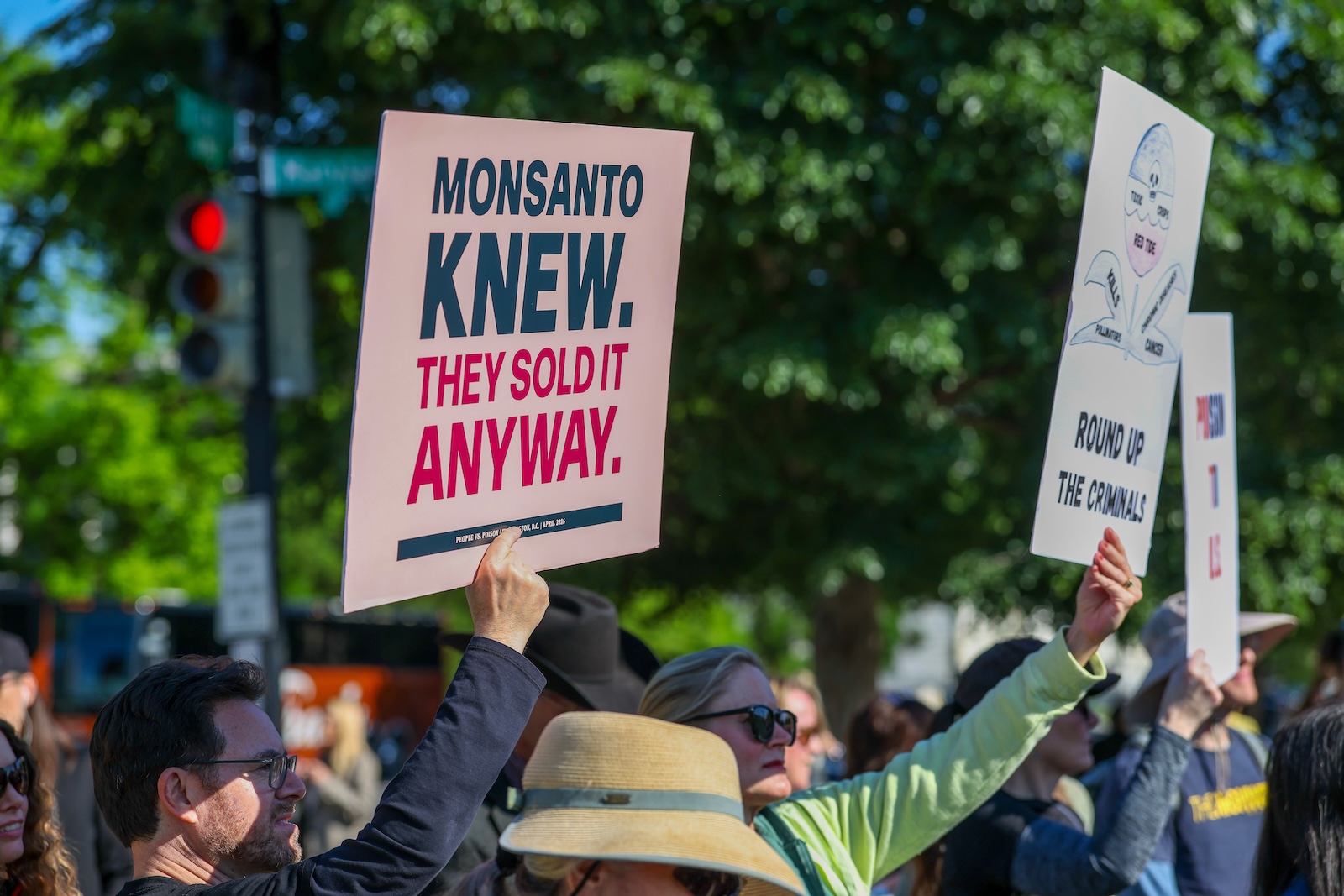
The Supreme Court is reviewing whether Monsanto's Roundup herbicide must carry a cancer warning label, a decision that could fundamentally alter how the federal government regulates pesticides. The case hinges on whether California's Proposition 65 requirement for cancer warnings preempts federal pesticide labeling rules set by the Environmental Protection Agency.
Roundup, containing the active ingredient glyphosate, is the most widely applied herbicide in the United States. The EPA has concluded that glyphosate is not likely to cause cancer in humans. However, the International Agency for Research on Cancer, part of the World Health Organization, classified it as "probably carcinogenic to humans" in 2015.
California requires cancer warnings on products it determines pose cancer risk under Proposition 65. Several juries have awarded hundreds of millions in damages to Roundup users who developed non-Hodgkin's lymphoma. Monsanto, now owned by Bayer, argues that federal pesticide law prevents states from imposing stricter labeling requirements.
The Court's decision carries political weight. Trump's base includes agricultural interests that depend on Roundup and oppose stricter regulations. Simultaneously, environmental advocates and some consumers demand clearer risk disclosure.
The ruling will determine whether states can independently set pesticide safety standards or whether federal EPA determinations override state law. If the Court sides with California, manufacturers may face a patchwork of state-level requirements. If federal law prevails, the EPA's assessment becomes the ceiling for warning requirements nationwide.
The case reflects ongoing tension between protecting public health and supporting agricultural efficiency. The stakes extend beyond glyphosate to other chemicals facing similar state-level scrutiny.
THE BOTTOM LINE: The Supreme Court's decision will either strengthen state authority over pesticide safety labels or cement federal EPA determinations as the final word on herbicide warnings.