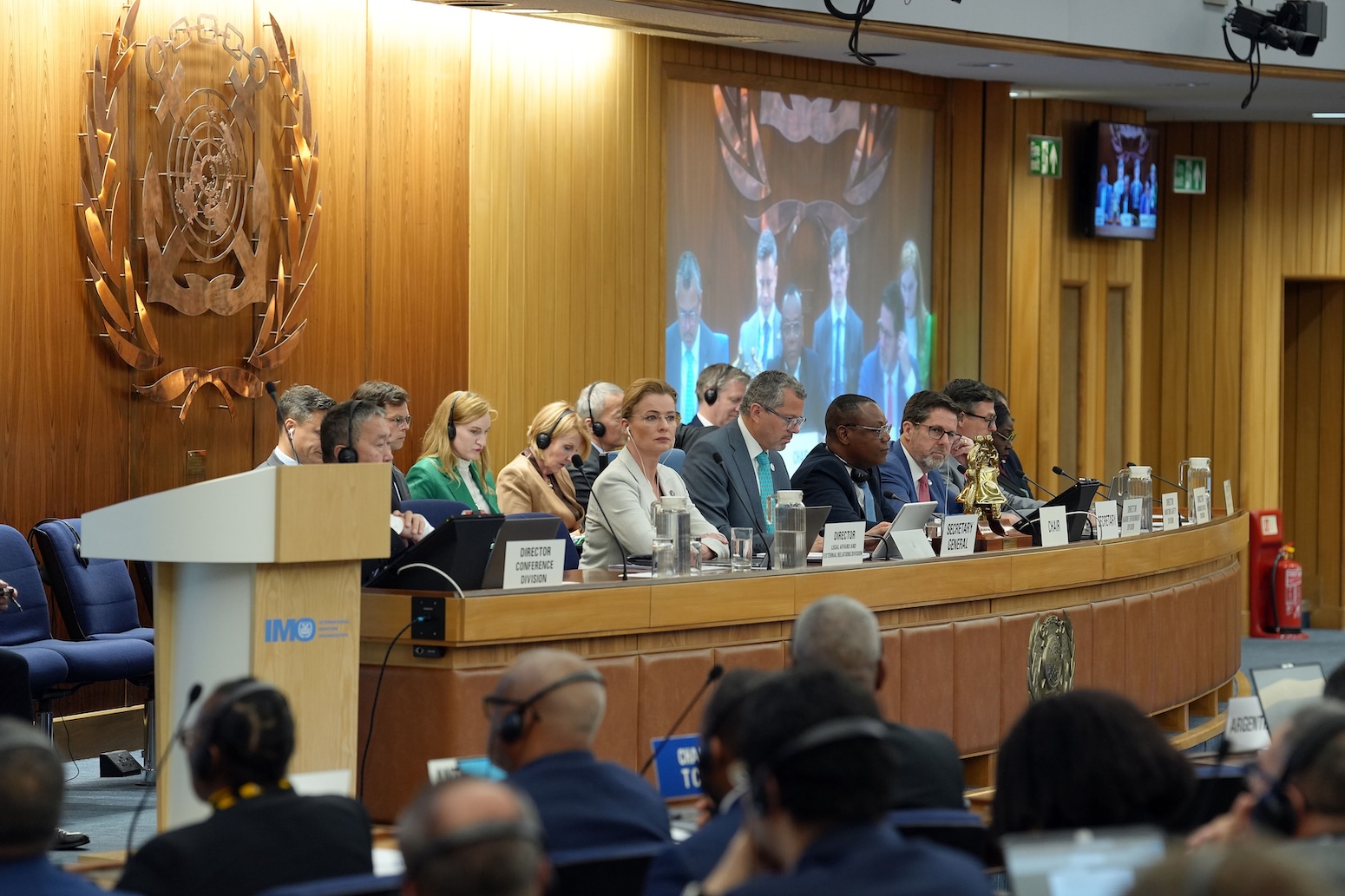
The International Maritime Organization (IMO) restored momentum toward a landmark agreement to decarbonize global shipping after negotiations nearly collapsed over disagreements between wealthy nations and developing countries on financing and implementation timelines.
Nations reached consensus on a framework requiring the international shipping sector to achieve net-zero greenhouse gas emissions by 2050, with interim targets demanding a 20 percent reduction by 2030 and 70 percent by 2040. The deal emerged from the IMO's Marine Environment Protection Committee meeting after delegates resolved disputes over how to fund the transition for vessels operating under flags of developing nations.
The breakthrough hinged on establishing a technical cooperation mechanism to assist lower-income countries in upgrading fleets to zero-carbon fuels and technologies. Wealthy maritime nations agreed to contribute to capacity-building programs, though the funding commitment remains limited relative to estimated costs exceeding $1 trillion to retrofit global shipping infrastructure.
Shipping generates roughly 3 percent of global carbon dioxide emissions and remains largely unregulated under the Paris Agreement. The sector's fuel consumption consists primarily of heavy fuel oil, the dirtiest marine fuel available. Without intervention, shipping emissions could increase 50 to 250 percent by 2050 as trade volumes expand.
The agreement establishes binding rules for ship owners to monitor and report emissions starting in 2024. Vessel operators must adopt approved technologies or use sustainable fuels, though compliance mechanisms and penalties remain undefined pending further technical work.
Tensions between negotiating blocs nearly derailed talks. Island nations and least-developed countries worried that aggressive targets and rapid fuel transition would devastate their shipping fleets and economic competitiveness. They opposed draft language they viewed as punitive to vessels under their flags. Meanwhile, the European Union and Nordic nations pushed harder emissions reductions to align shipping with 1.5-degree climate pathways.
The compromise prioritizes cooperation over coercion, allowing