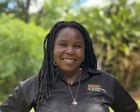
Moreangels Mbizah, a conservation biologist in Zimbabwe, founded the first conservation organization in the country led by a black African woman after a 2014 incident forced her to confront a fundamental problem: lions and people cannot safely coexist without intervention.
While monitoring lions in Hwange National Park for her PhD research, Mbizah's GPS collar data showed a lion had entered a nearby village. The incursion illustrated what conservation organizations across Africa face daily. Wildlife populations need space to survive, but human settlements expand into their habitats. When animals venture into villages searching for food or territory, locals kill them to protect livestock and families.
Mbizah's response moved beyond academic research. She recognized that wildlife conservation fails without addressing the economic pressures driving human-wildlife conflict. Villagers kill predators because those animals kill cattle, sheep, and goats that represent their primary income and food security. Dead livestock means immediate financial loss. Conservation policy that ignores this reality collapses against local necessity.
Her organization works across Zimbabwe's border regions where wildlife corridors intersect with human communities. The approach combines several strategies. Mbizah's team installs predator-proof fencing around livestock enclosures, reducing attacks without removing lions from their range. They establish compensation programs when livestock losses occur, removing the financial incentive to kill predators. They also train community members as wildlife monitors and conflict responders, building local expertise and investment in conservation outcomes.
This model treats human-wildlife conflict not as a conservation problem separate from human welfare, but as an integrated challenge requiring economic solutions. When villages benefit from living wildlife through ecotourism revenue or avoided losses from protective infrastructure, they protect that wildlife.
Mbizah's work operates within Zimbabwe's broader wildlife management framework while addressing gaps in implementation. Her organization's model has expanded across multiple districts, demonstrating that human-wildlife co