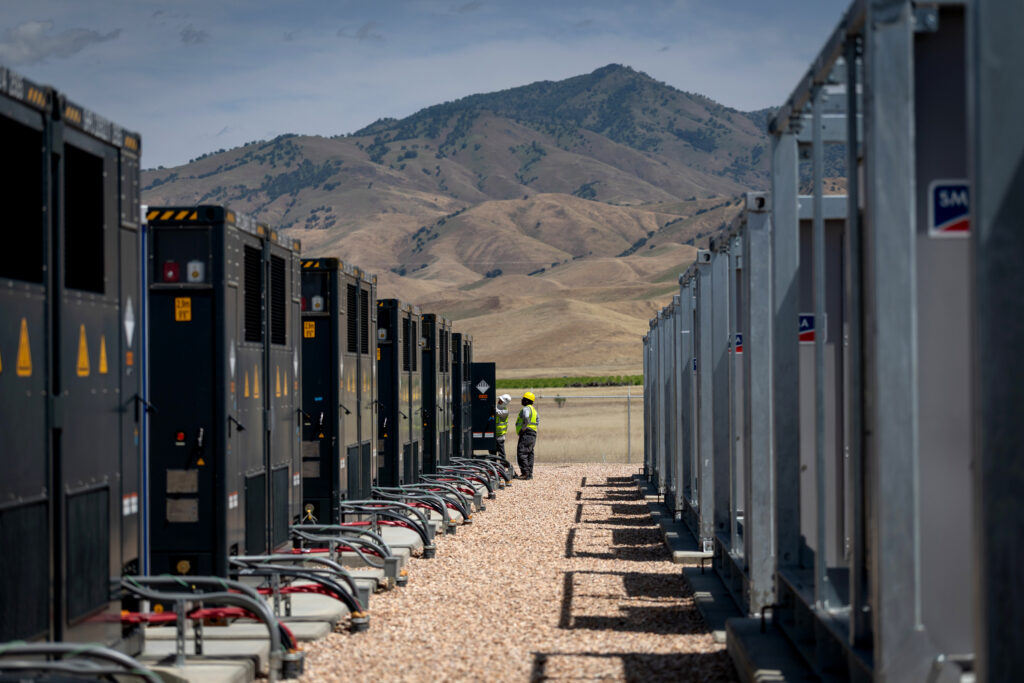
California's battery storage systems discharged a record 12,000 megawatts in late March, matching the output of 12 large nuclear power plants during peak evening demand. The state deployed this stored energy as families cooked dinner and turned on televisions, demonstrating battery arrays' growing capacity to stabilize the grid without fossil fuels.
This milestone reflects California's accelerating transition from natural gas plants to renewable energy paired with storage. The state installed roughly 6.7 gigawatts of battery capacity by early 2024, more than any other U.S. state. Battery systems now store energy when solar and wind generation peaks, then release it during high-demand hours.
The discharge record carries real grid implications. California operators at CAISO (California Independent System Operator) relied on batteries to meet evening demand without activating reserve natural gas generators. This approach reduces both emissions and operational costs. A single megawatt-hour from a battery costs substantially less than emergency natural gas dispatch.
Battery storage solves a core renewable energy problem: the mismatch between when wind and solar generate power and when people consume it. Solar peaks at midday; demand peaks in early evening. Batteries bridge this gap, allowing California to avoid the "duck curve" problem where the grid scrambles to replace dropped solar output with gas plants at sunset.
Challenges remain. Battery technology remains expensive. Installing a megawatt of four-hour storage capacity costs roughly $300,000 to $400,000 today. Long-duration storage for multi-day gaps in renewable generation barely exists at scale. Most California batteries are lithium-ion with four-hour duration, insufficient for winter periods when clouds persist for days.
California targets 11.5 gigawatts of battery storage by 2026 under its procurement mandate. Regulators approved plans for longer-duration systems including compressed air and thermal storage