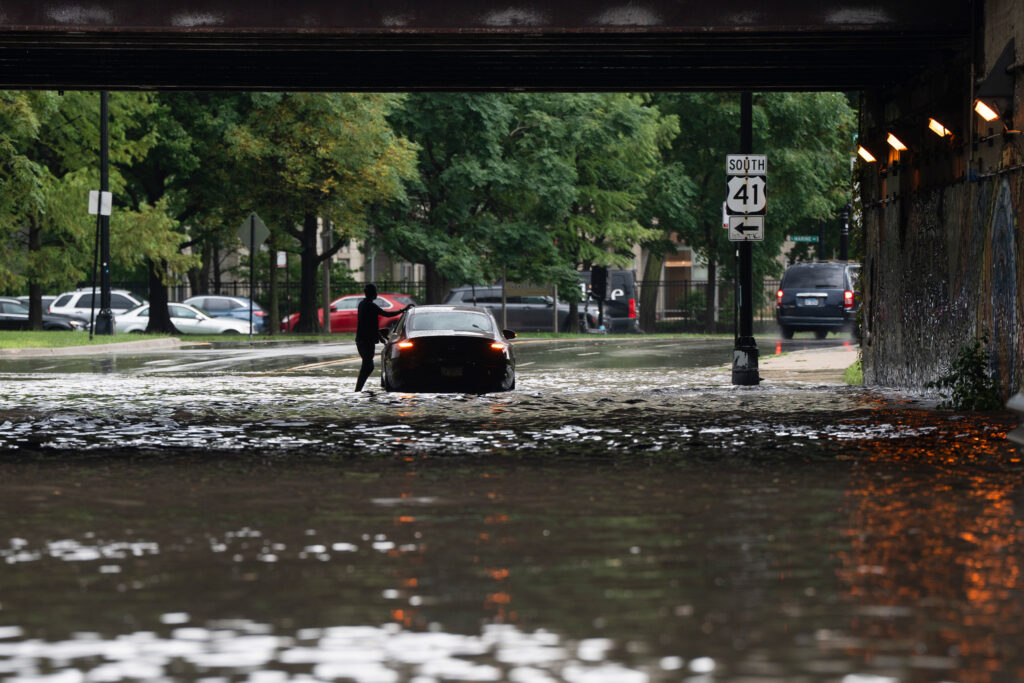
Heavy rainfalls are overwhelming Chicago's aging stormwater infrastructure, with climate change intensifying the problem faster than the city's systems can adapt.
University of Illinois researchers issued a stark warning in "Bulletin 76" last year. The assessment projects that intense rainfall events will worsen substantially over the next 25 years due to climate change. Current infrastructure designed to handle historical precipitation patterns will become inadequate within decades.
Chicago faces a compounding crisis. The city's stormwater system, built decades ago, relies on combined sewers that blend rainwater with sewage. When storms dump water faster than pipes can process it, raw sewage backs up into streets, basements, and waterways. Recent flooding events have demonstrated this vulnerability repeatedly.
The Illinois research connects two threads. First, warming air holds more moisture. The atmosphere retains roughly 7 percent more water vapor for every degree Celsius of warming. Second, climate models show the Midwest experiencing more frequent extreme precipitation events. What once qualified as a 50-year storm may occur every 20 years by 2050.
Chicago has invested in some remediation. The city constructed Deep Tunnel, a massive underground reservoir system completed in 2006, which stores excess stormwater and sewage during storms. Yet capacity remains inadequate for intensifying rainfall. Heavy storms in recent years have repeatedly exceeded design specifications.
The stakes extend beyond property damage. Flooding contaminates drinking water sources, corrodes infrastructure, and forces wastewater treatment plants offline. Communities in low-lying neighborhoods experience disproportionate impacts.
City officials now face an expensive reckoning. Retrofitting combined sewer systems, expanding detention capacity, and rebuilding stormwater infrastructure requires billions of dollars. Chicago must decide whether to upgrade systems for 21st-century rainfall patterns or accept escalating flood damage.
The University of Illinois research removes ambiguity from climate