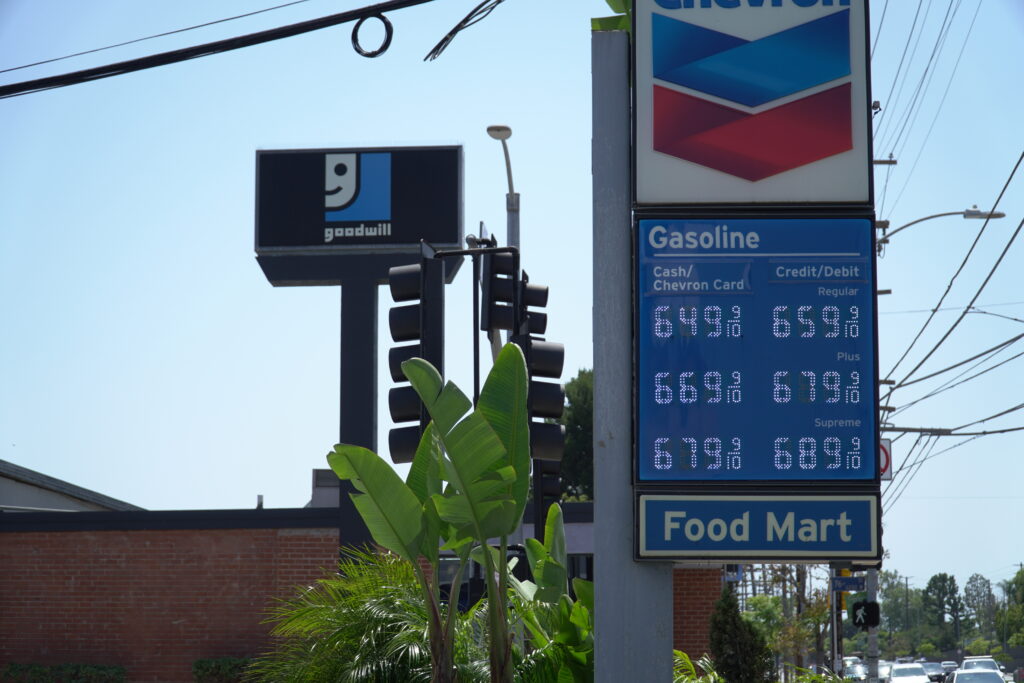
California gas prices have exceeded $6.49 per gallon in some areas, forcing drivers to fundamentally change their behavior. Veronica Cervantes, a 54-year-old Los Angeles resident, now walks instead of driving short distances and has cut back on shopping trips to manage fuel costs over the past two months.
The price spike traces directly to geopolitical tension with Iran. Disruptions to global oil supplies from Middle Eastern conflicts push crude prices higher, and California's unique fuel blend and stricter environmental regulations mean the state's gas prices climb faster than the national average. Refineries producing California's special blend fuel face limited supply chains, amplifying price swings when international markets tighten.
This cost burden falls heaviest on working families who depend on cars for employment and errands. Unlike wealthy drivers who absorb higher fuel costs easily, lower-income Californians face genuine trade-offs. Cervantes represents thousands choosing between driving and other necessities.
Gas prices reveal how climate policy intersects with global economics. California's environmental fuel standards reduce pollution but create a captive market for specialized gasoline. When international oil supplies contract, California bears disproportionate costs. The solution requires both addressing supply vulnerabilities through renewable energy investment and recognizing that clean fuel mandates need corresponding support for affected communities during transition periods.