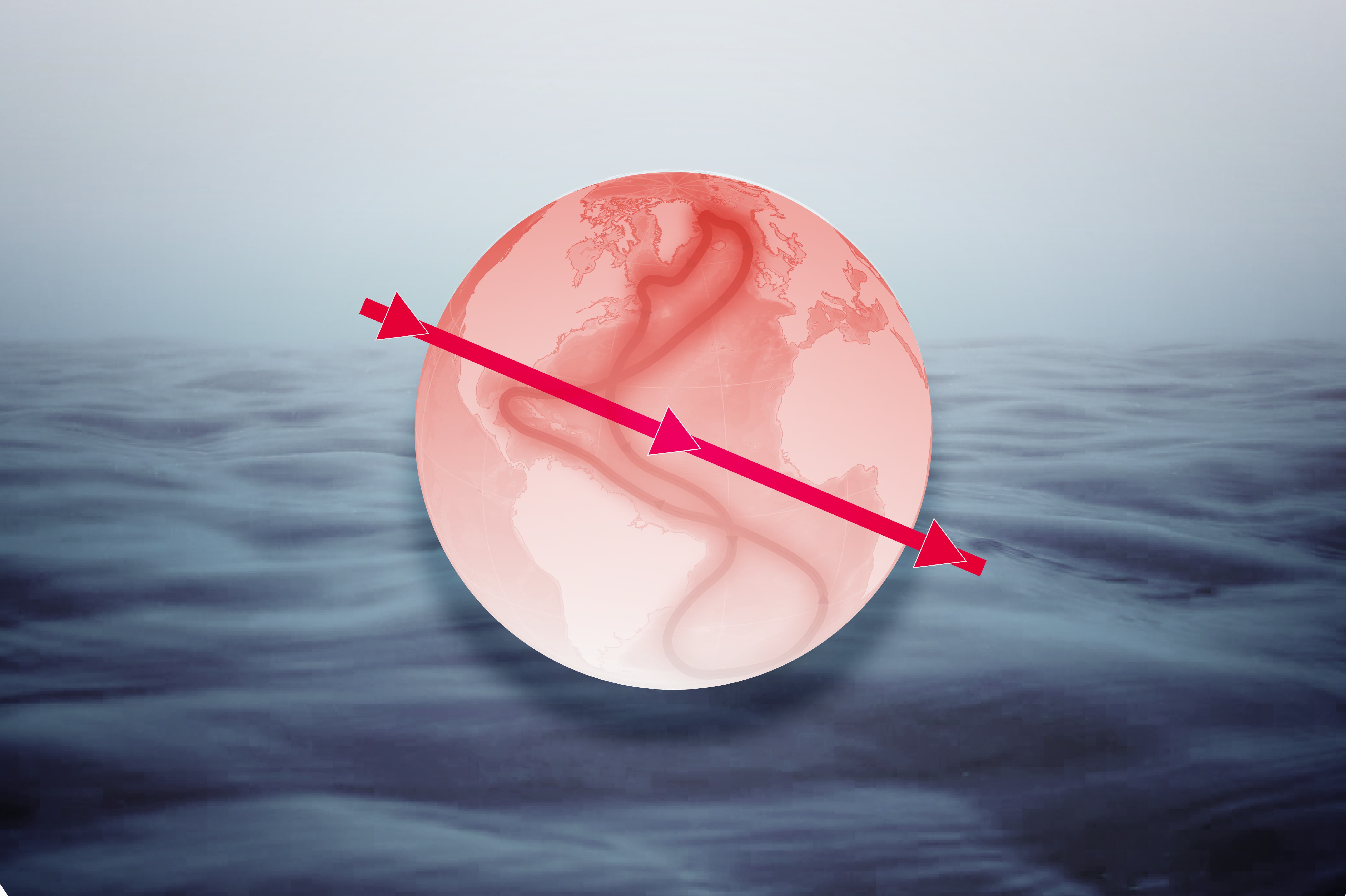
The Atlantic Meridional Overturning Circulation (AMOC), a system of ocean currents that transports warm water northward and cold water southward, shows signs of weakening from climate change. Scientists track this system because it stabilizes regional climates and influences weather patterns across the Northern Hemisphere.
Warming freshwater from melting Greenland ice sheets dilutes the salt content of North Atlantic waters. Lower salinity reduces water density, slowing the sinking motion that drives AMOC circulation. Recent studies document a 15% decline in circulation strength over the past century.
The consequences extend beyond the Atlantic. A slower or collapsed AMOC would cool Northern European temperatures, intensify Atlantic hurricanes, and disrupt fish populations that depend on current-driven nutrient cycling. The eastern United States would experience faster sea level rise without the current's water redistribution effects.
Climate models disagree on timing. Some projections show critical weakening within decades. Others suggest the system has greater resilience than previously thought. What remains certain: continued warming increases the probability of disruption.
Researchers emphasize that AMOC changes operate on decadal timescales, making current observations difficult to separate from natural variability. Emissions reductions remain the primary lever for preventing further deterioration.