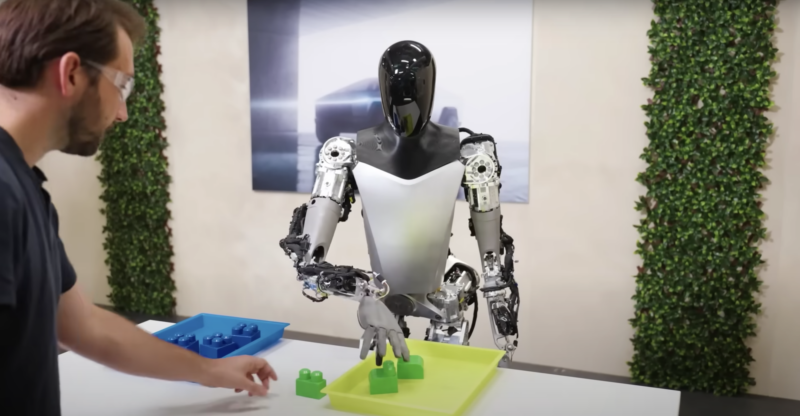
Tesla plans to build humanoid robots at industrial scale. The company revealed in its latest shareholder report that it will begin preparing a large-scale Optimus factory in the second quarter. The first production line will manufacture 1 million robots annually and will replace Tesla's Model S assembly operations.
The announcement raises a basic question. Tesla has not disclosed who will buy these robots or what they will do. The company mentions "robots" only three times in its quarterly filing, with two references appearing in a dedicated robotics section. This sparse communication leaves major details unclear.
Tesla positions the Optimus project as central to its future. The company has previously stated that humanoid robots could become more valuable than its vehicle business. Yet the practical applications remain vague. Manufacturing facilities need workers, warehouses need logistics support, and agriculture needs labor. Tesla has not specified which sectors will deploy these machines or in what quantities.
The 1 million annual production target represents an enormous commitment. Building facilities to produce that volume requires major capital investment and supply chain coordination. Tesla's willingness to convert a Model S factory signals confidence in demand, but the company has offered no customer agreements or letters of intent from potential buyers.
Environmental implications depend on how Tesla powers these robots and what tasks replace human labor. Energy-efficient automation could reduce industrial emissions. Conversely, manufacturing 1 million units yearly carries its own environmental cost.